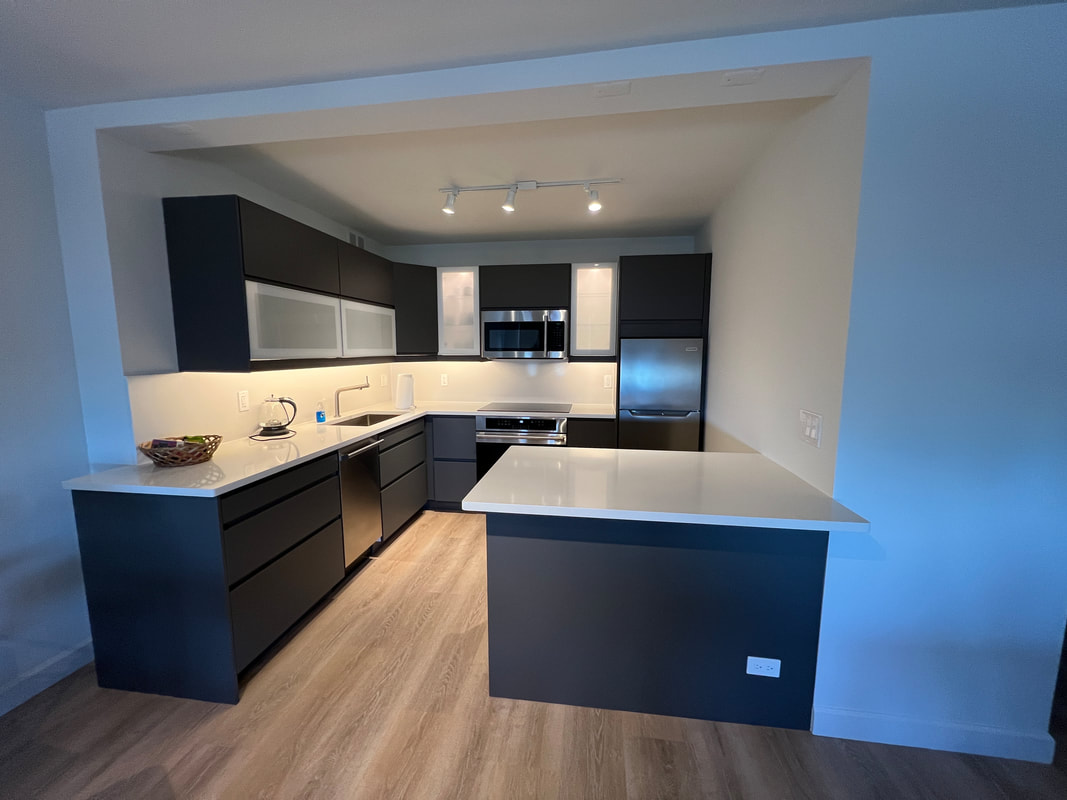
Most kitchen trend articles are one designer's opinion dressed up as fact. This one is different. We started with the two most authoritative industry data sets published for this cycle, the 2025 U.S. Houzz Kitchen Trends Study and the NKBA and KBIS 2026 Kitchen Trends Report, then compared every major finding against what Assembly Squad is actually building across Chicago and the North Shore after 500+ projects since 2013.
The result is a field-tested read on which national trends translate to Chicago's specific housing context of high-rise condos, vintage greystones, two-flats, and North Shore estates, and which ones quietly fall apart the moment you open a hundred-year-old wall. If you want the pure design story instead of the data, see our companion Chicago kitchen design trends 2026 field report. If you are ready to plan a project, start with kitchen remodeling in Chicago.
What the Houzz 2025 Data Found
The 2025 U.S. Houzz Kitchen Trends Study surveyed 1,620 homeowners who recently completed, were completing, or were planning a kitchen project. A few findings stand out because they directly shape budget and design decisions:
- Style is changing, and it is getting more traditional. More than four in five homeowners (81 percent) change their kitchen style during a remodel. Transitional remains the leader at 25 percent, but traditional rose to 14 percent, while farmhouse continued to slide to 7 percent.
- Spending rose, especially at the high end. The median major remodel reached $60,000, up about 10 percent year over year, while the top 10 percent of spenders invested $180,000 or more.
- Kitchens are expanding. About 35 percent of homeowners enlarge the kitchen footprint, and 29 percent do it by taking space from the dining room. Over half of renovated kitchens now measure 200 square feet or more.
- Backsplashes are climbing the wall. Coverage that extends to the cabinets or hood rose to 67 percent, and full coverage to the ceiling reached 12 percent. About a quarter of homeowners chose a larger-format slab backsplash instead of tile.
- Islands are storage-first. Rectangular islands dominate at 78 percent, with 80 percent adding drawers and 79 percent adding doored cabinets. Nearly six in ten put at least one appliance in the island.
- Most homeowners hire a pro. 86 percent of these projects were done with professional help rather than fully DIY.
What the NKBA and KBIS 2026 Report Found
The NKBA and KBIS 2026 Kitchen Trends Report looks three years ahead, drawing on 634 North American industry professionals, most of them NKBA members and a majority working designers. It is less about one year's purchases and more about where design is heading. The headline themes:
- Transitional and timeless lead the next three years at 72 percent, followed by contemporary, modern, and minimalist at 60 percent and organic and natural at 58 percent.
- Neutrals stay supreme at 96 percent, but greens (86 percent) and blues (78 percent) are the rising statement colors, which lines up exactly with the green and navy islands we build most.
- Lighting is a top design priority. Natural light was named important by 95 percent, with under-cabinet lighting (82 percent), interior cabinet lighting (72 percent), and pendants (63 percent) leading the fixture list.
- The kitchen is taking over the home. 76 percent expect kitchen footprints to grow, and 94 percent say homeowners are adding connected functional spaces like mudrooms and flex offices.
- Function zones are expanding, with dedicated beverage areas (85 percent), eat-in kitchens (59 percent), and even pet feeding stations (64 percent) on the rise.
- Smart and wellness features are in the growth phase, including powerful vent hoods (85 percent), enhanced storage (72 percent), smart and spacious refrigerators (72 percent), and steam cooking (66 percent).
National Data vs. Chicago Reality
Here is where the two converge and diverge. National surveys describe the average American kitchen. Chicago is not average, between the age of the housing, the condo boards, and the permit rules. This table is the core of the guide: each national finding, and how it actually plays out on a Chicago job site.
| What the Data Says | How It Plays Out in Chicago |
|---|---|
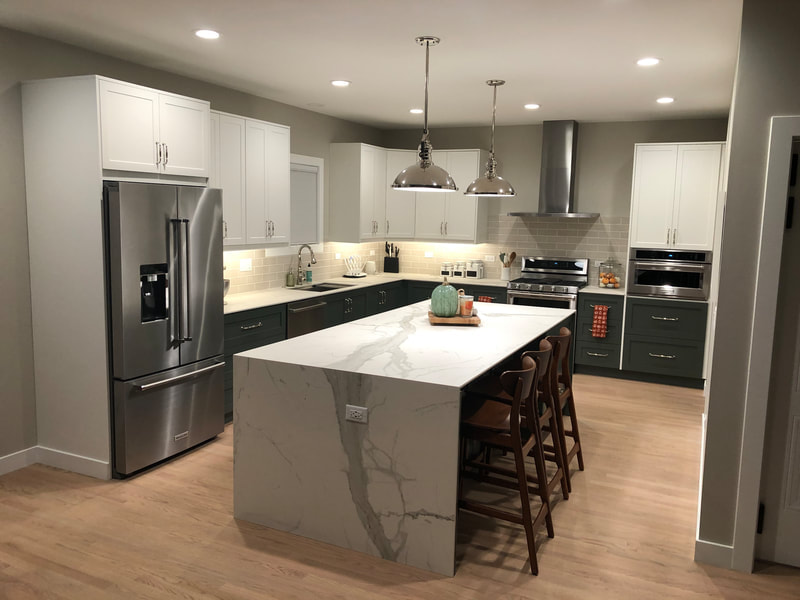
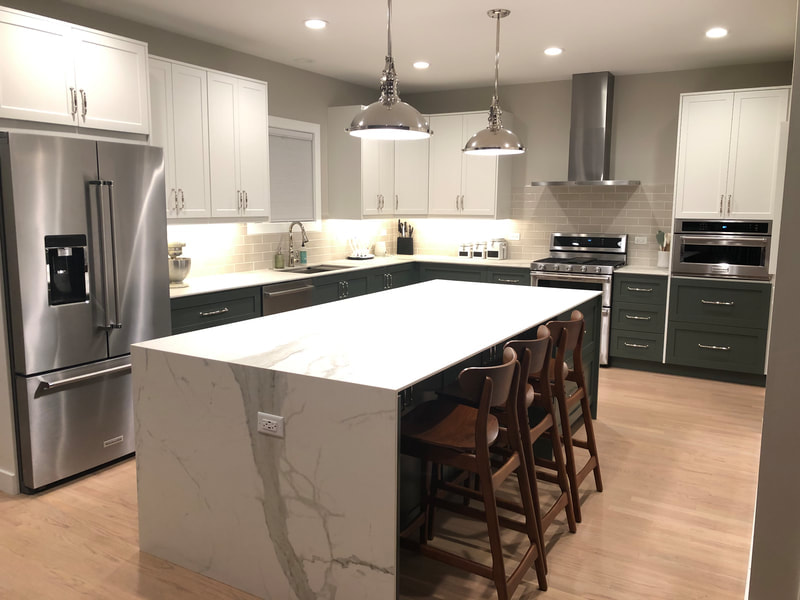
| Transitional and timeless lead (NKBA 72%, Houzz 25%) | Confirmed. Warm transitional is our most requested look, warm white perimeter with a contrasting island, not the stark all-white of 2015 to 2020. |
| Kitchens are growing (NKBA 76%, Houzz 35% expand) | Partly. In vintage greystones and two-flats, growth means removing one non-load-bearing wall to the dining room, not an addition. See our Chicago modern kitchen ideas. |
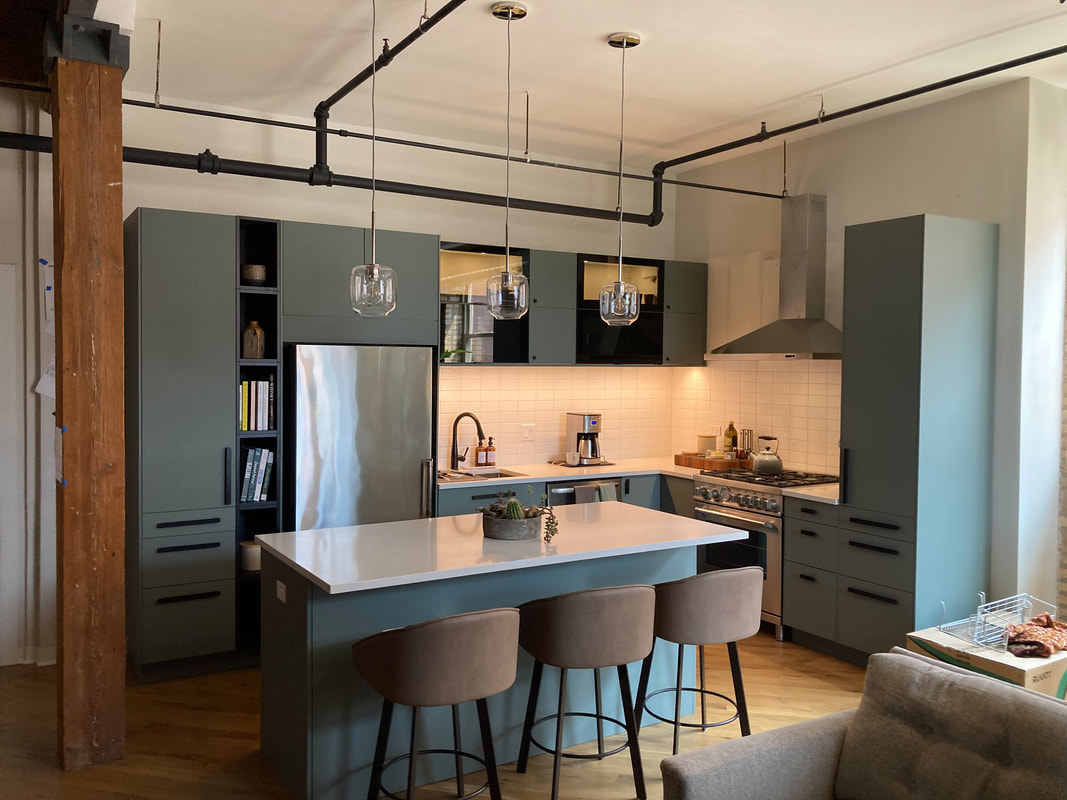
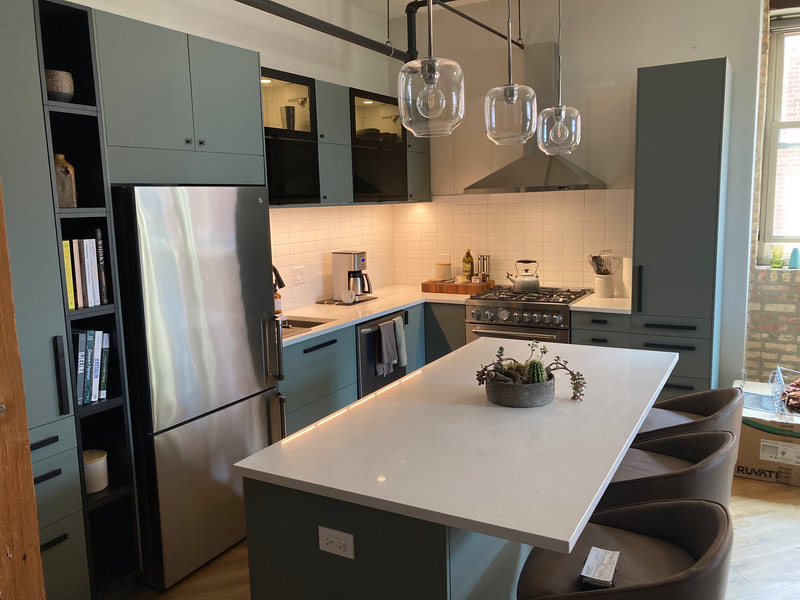
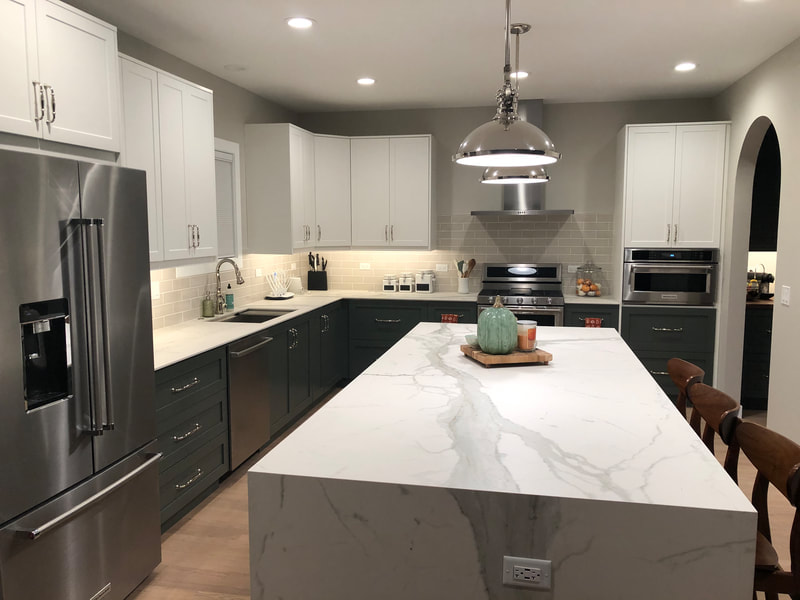
| Green and navy are the rising colors (NKBA) | Confirmed and dominant. Navy and forest green islands against a warm neutral perimeter are the top two-tone requests at our studio. |
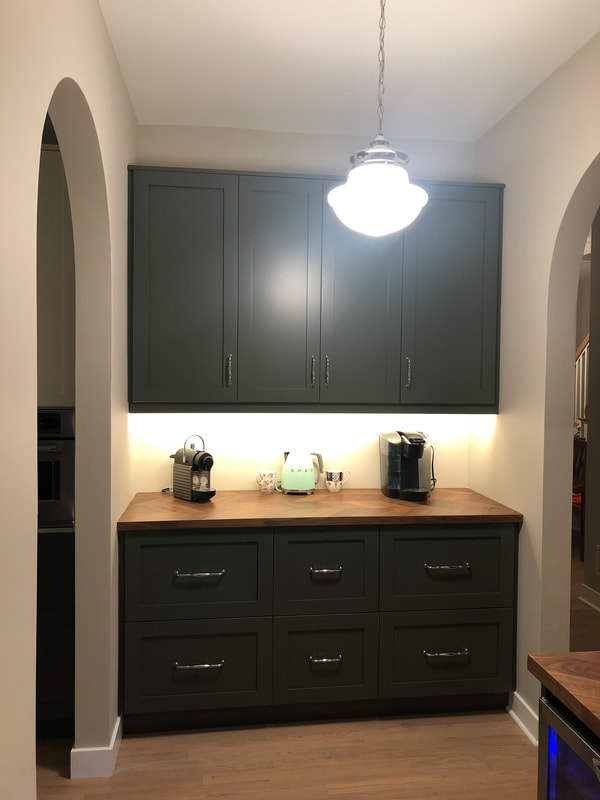
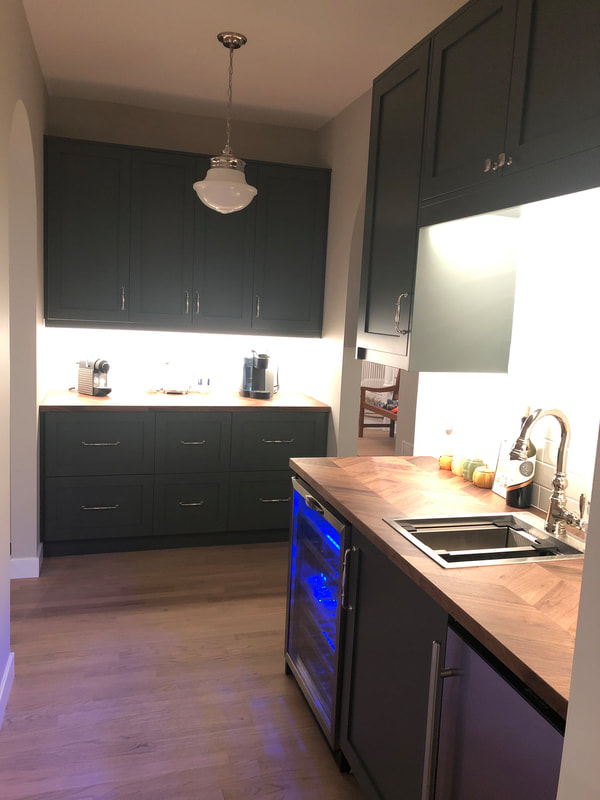
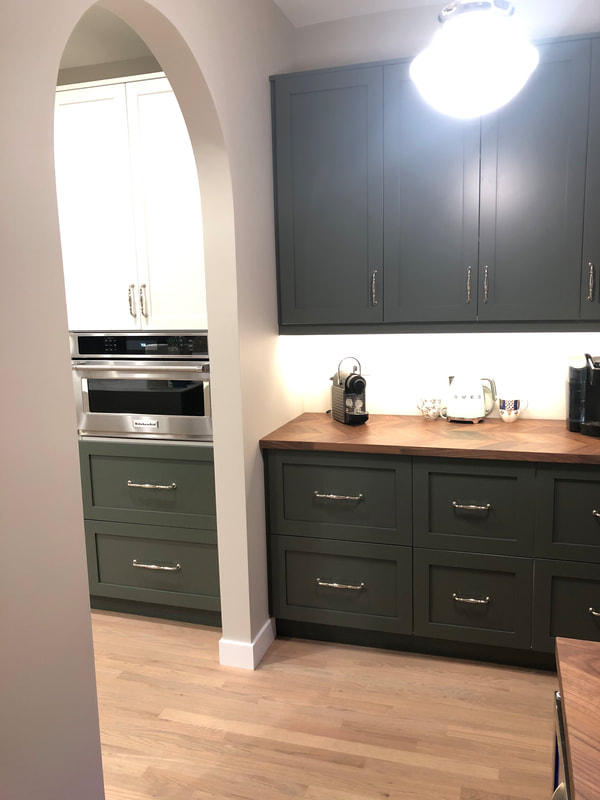
| Walk-in and butler pantries growing (NKBA) | Strongly confirmed in premium work. The hidden pantry is the biggest single upgrade in $150K plus Chicago gut rehabs. |
| Backsplash going full height (Houzz) | Confirmed. Full-height slab or stone behind the range is replacing subway tile, especially in Lincoln Park and Gold Coast. |
| Median spend $60K, high end $180K plus (Houzz) | Tracks closely. Chicago mid-range full remodels run $55K to $95K, premium gut rehabs $120K to $250K plus. See the Chicago kitchen cost guide. |
| Smart and wellness features rising (NKBA) | True mostly at higher budgets and in condos, where work-from-home owners invest more. See Chicago condo remodeling trends. |
| Farmhouse fading (Houzz 7%) | Confirmed. Farmhouse sinks and shiplap rarely fit Chicago condos and pre-war homes, and requests have dropped sharply. |
The 6 Data-Backed Trends Worth Building in Chicago
1. Warm Transitional Palettes
Warm whites, greige, and putty tones with natural wood and warm metal accents. Clean lines without the cold, clinical feel of the all-white era.
Data: transitional leads at NKBA 72% and Houzz 25%2. Contrasting Color Islands
A navy, forest green, or black island against a warm neutral perimeter. The island reads as furniture and anchors the room.
Data: greens 86%, blues 78% as statement colors, NKBA3. Hidden Pantries and Sculleries
A dedicated prep and storage room behind a flush door keeps the main kitchen clean and architectural. The premium upgrade of 2026.
Data: walk-in and butler pantries in NKBA growth phase4. Full-Height Backsplashes
Slab stone or large-format material running to the underside of the cabinets or all the way to the ceiling behind the range.
Data: to-hood coverage 67%, to-ceiling 12%, Houzz5. Layered, Warm Lighting
Natural light first, then under-cabinet, interior-cabinet, and pendant layers in warm color temperatures rather than a single cold ceiling fixture.
Data: natural light 95%, under-cabinet 82%, NKBA6. Storage-First Islands
Deep drawers, doored cabinets, and an integrated appliance or beverage zone built into a generous rectangular island.
Data: 80% add drawers, 79% add cabinets, HouzzWhat the Data Says Is Fading in 2026
Choices the Surveys and Our Job Sites Both Show Declining
- Stark cold all-white kitchens: The transitional and warm shift in both reports has moved homeowners away from the bright-white, white-subway, stainless-everything kitchen of the last decade.
- Farmhouse style: Down to 7 percent in the Houzz study, and a poor fit for most Chicago condos and pre-war homes.
- Open shelving as primary storage: Both the move toward enhanced and concealed storage and the practical reality of dust and grease have pushed this back to a small accent role.
- Small-format subway tile backsplash: Losing ground to slab and full-height treatments as backsplash coverage rises.
- All-matching stainless appliance suites: Giving way to panel-ready integration and statement ranges in higher-budget kitchens.
Want These Trends Priced for Your Kitchen?
Visit our Lincoln Park design studio at 2315 N Southport Ave to see Illinois-made cabinetry, stone, and finishes in person, and get a fixed-price proposal within 48 hours. Free consultation.
(312) 544-9150 Schedule at assemblyserviceil.comWhere Chicago Diverges From the National Numbers
The data is a strong starting point, but three Chicago realities consistently bend it. Understanding them is the difference between a smooth project and an expensive surprise.
The Three Chicago Factors the National Surveys Do Not Capture
- The housing is old, so expansion is constrained. National data shows a third of homeowners growing the kitchen. In Chicago's pre-1960 greystones, two-flats, and bungalows, that usually means removing one wall to the dining room, since additions are limited by lot lines, zoning, and party walls. Roughly two-thirds of remodels keep the existing footprint and win with smart reconfiguration instead.
- Condo boards add a layer the surveys ignore. More than half of our kitchen projects are in condo buildings, where HOA approval, freight elevator scheduling, work-hour limits, and restrictions on moving wet walls shape the design before a single trend is chosen. See our condo remodeling trends guide.
- Tariffs changed the cabinetry math. The national studies do not weigh in on import tariffs, but they have reshaped Chicago cabinetry decisions. Illinois-made custom cabinetry avoids the added tariff cost on European and Asian imports, ships in 4 to 6 weeks, and can be sized for non-standard vintage layouts.
Chicago Kitchen Cost in 2026 vs. the National Median
Houzz put the national median major remodel at $60,000 and the high end at $180,000 or more. Chicago tracks that closely, with local building type and condo logistics driving the spread. Here is the current Chicago picture from our completed projects:
| Project Level | What It Includes | Chicago Cost Range |
|---|---|---|
| Entry Refresh | New Illinois-made cabinetry, countertop, hardware, lighting, backsplash, no layout change | $25,000 to $45,000 |
| Mid-Range Full Remodel | New layout, custom cabinetry, quartz, appliances, flooring, all permits | $55,000 to $95,000 |
| Premium Gut Rehab | Hidden pantry, integrated appliances, statement hood, natural stone, condo logistics | $120,000 to $250,000+ |
| North Shore Luxury | Scullery, professional range, ceiling-height cabinetry, full design-build service | $175,000 to $350,000+ |
For a full line-item breakdown by neighborhood and building type, see the Chicago kitchen remodel cost guide, or browse real projects with prices in our kitchen before and after gallery.
North Shore Kitchens: Where the Luxury Data Lands
The high end of the Houzz data, the homeowners spending $180,000 and up, maps closely to North Shore work. Larger footprints in Winnetka, Highland Park, Glencoe, and Lake Forest support full sculleries, professional ranges, integrated column refrigeration, and ceiling-height cabinetry, the exact features the NKBA report flags as growing. If your project is up north, see our high-end kitchen remodeling on the North Shore and whole-home North Shore renovations.
How to Use This Data on Your Own Kitchen
Viktor's Three Rules for Reading Kitchen Trend Data
- Trends are a starting point, not a spec sheet. The data tells you transitional and warm neutrals are safe, broadly liked, and resale-friendly. It does not tell you what fits your building or how you cook. That is what a design consultation is for.
- Match the trend to the building. A full-height stone backsplash and a navy island look right in a Lincoln Park greystone. The same choices can feel off in a small high-rise galley. The national average kitchen does not exist in your home.
- Spend where the data and resale agree. Cabinetry, the island, lighting layers, and the range area are where both the surveys and Chicago buyers reward investment. That is where to put the budget, not on a brand-name countertop nobody notices.
Related Chicago Kitchen Guides
Trends and Ideas
Frequently Asked Questions
What do the 2026 kitchen trend reports actually say?
The two leading data sets agree on the big picture. The NKBA and KBIS 2026 Kitchen Trends Report (634 industry professionals) names transitional and timeless design the top style at 72 percent, neutrals supreme at 96 percent with greens and blues rising, and expects 76 percent of kitchens to grow in footprint. The 2025 U.S. Houzz Kitchen Trends Study (1,620 homeowners) found transitional leading at 25 percent, a $60,000 median major remodel, backsplashes climbing toward the ceiling, and storage-first islands. In short: warm transitional style, color on the island, more storage, and bigger kitchens.
Are these national trends accurate for Chicago kitchens?
Mostly, with three local adjustments. Style trends (warm transitional, contrasting islands, full-height backsplashes) hold up well in Chicago. But kitchen expansion is constrained by old housing and lot lines, so most Chicago remodels reconfigure the existing footprint rather than add on. Condo boards add approval and logistics steps the surveys ignore. And import tariffs have made Illinois-made cabinetry the practical local choice, a factor the national studies do not address.
What kitchen style is most popular in 2026?
Transitional and timeless. The NKBA 2026 report puts it at 72 percent, ahead of contemporary and modern at 60 percent and organic and natural at 58 percent. Houzz found transitional the most chosen style at 25 percent among renovating homeowners, with traditional rising and farmhouse falling to 7 percent. In Chicago this shows up as warm transitional: warm white or greige cabinets, a contrasting island, natural stone, and warm metal hardware.
What is the most popular kitchen island color for 2026?
Green and navy lead the rising statement colors, with NKBA reporting greens at 86 percent and blues at 78 percent behind a 96 percent neutral base. Houzz found about a quarter of homeowners choose a contrasting island, with black the top contrasting countertop color. At Assembly Squad, navy and forest green islands against a warm neutral perimeter are the most requested two-tone combinations in Chicago in 2026.
How much does a kitchen remodel cost in Chicago in 2026?
Chicago tracks close to the national Houzz median of $60,000 for a major remodel. Local ranges from our completed projects: entry refresh $25,000 to $45,000, mid-range full remodel $55,000 to $95,000, premium gut rehab $120,000 to $250,000 and up, and North Shore luxury $175,000 to $350,000 and up. See the full Chicago kitchen remodel cost guide for a line-item breakdown, and request a fixed-price proposal within 48 hours of a free consultation.
Is the all-white kitchen out for 2026?
The cold, stark all-white kitchen is clearly past its peak. Both the Houzz and NKBA data point toward warm transitional palettes and rising statement colors. White is not gone, but the 2026 version is a warm white paired with natural wood, a contrasting island, and warm metal hardware, rather than the bright-white, white-subway, all-stainless look of the last decade.
What is a butler pantry or scullery, and why is it trending?
It is a dedicated prep and storage room next to the main kitchen, usually behind a flush door, that holds countertop appliances, extra refrigeration, a second sink, and pantry goods. NKBA lists walk-in and butler pantries among the growth-phase trends for the next three years. In Chicago it is the single biggest upgrade we build in premium gut rehabs, because it lets the main kitchen stay clean and free of upper-cabinet clutter.
Why does Illinois-made cabinetry matter for a Chicago kitchen in 2026?
The national trend reports do not cover it, but import tariffs have made it the practical Chicago choice. Illinois-made custom cabinetry avoids the added tariff cost carried by many European and Asian brands, ships in roughly 4 to 6 weeks rather than 10 to 16, locks in pricing at contract signing, and can be sized for the non-standard layouts common in vintage Chicago homes. Assembly Squad specifies it on every project.