• Home
  • About Us
  • Services
  • GET FREE ESTIMATE
  • Portfolio
  • Service Area
  • Blog
Kitchen,Bath,Condo Remodeling In Chicago| Assembly Squad
  • Home
  • About Us
  • Services
  • GET FREE ESTIMATE
  • Portfolio
  • Service Area
  • Blog
How to make your kitchen more functional in Chicago -- open concept kitchen renovation by Assembly Squad

How to Make Your Kitchen More Functional in Chicago

8 contractor-proven upgrades for Chicago kitchens — from Lincoln Park greystones to Lakeshore East high-rises. What actually works in Chicago's specific building types, and what generic advice gets wrong.
Viktor Aharon
Viktor Aharon, Assembly Squad Remodeling
March 2026
13 min read

How to Make Your Kitchen More Functional in Chicago: The Quick Answer

The eight most impactful ways to make a Chicago kitchen more functional are: (1) open-concept wall removal to create flow and light, (2) custom cabinetry built to your exact dimensions — critical in Chicago's non-standard vintage buildings, (3) a kitchen island or peninsula adding counter space and seating, (4) layered LED lighting with under-cabinet task lighting, (5) a butler pantry to move staging clutter out of the main kitchen, (6) optimizing the work triangle between sink, range, and refrigerator, (7) integrated storage — pull-out drawers, deep base drawers, and appliance garages, and (8) upgrading appliance placement to match how you actually cook.

The Chicago-specific nuance: generic functionality advice assumes a standard suburban kitchen. Chicago's greystones, brownstones, two-flats, and high-rise condos have non-standard layouts, load-bearing constraints, HOA restrictions, and space limitations that change which upgrades are feasible and how much they cost. Every recommendation below is grounded in real Chicago project experience — not national renovation guides.

— Viktor Aharon, Founder & CEO, Assembly Squad Remodeling LLC. 500+ Chicago kitchen renovations since 2013. IL License #TGC098779. HQ: 205 N Michigan Ave. Lincoln Park Studio: 2315 N Southport Ave. (312) 544-9150.

Chicago kitchens are not average American kitchens. The city's housing stock — 60%+ built before 1950 — was designed for a completely different way of living. Galley kitchens in Lincoln Park three-flats. Compartmentalized layouts in Gold Coast greystones. Compact builder-standard kitchens in Lakeshore East glass towers. Making these kitchens genuinely functional requires understanding the specific building type, the structural constraints, and the HOA requirements that shape what's possible. This guide draws on 500+ completed Assembly Squad kitchen renovations across Chicago's neighborhoods to give you the advice that actually works here.

The 8 Most Impactful Kitchen Functionality Upgrades for Chicago Homes

1

Open-Concept Wall Removal — The Single Biggest Functional Change

In Chicago's pre-war greystones, brownstones, and vintage condos, the wall between the kitchen and dining or living room is the single biggest obstacle to kitchen functionality. Removing it doesn't just improve aesthetics — it fundamentally changes how the kitchen works. Natural light flows in from the living area. The cook is no longer isolated. Counter space effectively doubles when the kitchen borrows visual square footage from adjacent rooms. In Lakeshore East and Streeterville high-rises, this wall removal also exposes lake and river views from the kitchen for the first time.

Most walls between Chicago kitchens and dining or living rooms in pre-1960 buildings are non-load-bearing and can be removed without structural engineering work. Where a load-bearing beam is required, Assembly Squad includes a licensed structural engineer in scope at no extra charge. This is the most-requested single project in our Lincoln Park and Lakeview kitchen renovations — and the one with the highest buyer perception impact at resale.

Cost: $8,000–$35,000 Impact: Very High Timeline: 2–5 weeks
2

Custom Cabinetry Built to Your Exact Dimensions

Standard cabinet sizes — 12", 15", 18", 24" widths — were designed for new construction homes with standard stud spacing and square walls. Chicago's vintage buildings have neither. Greystones and brownstones built between 1880 and 1930 have walls that are rarely perfectly square, ceiling heights that vary by inches across the room, and corner dimensions that no standard cabinet handles cleanly. The result of installing standard cabinets: filler strips, awkward gaps, and wasted inches that add up to a kitchen that feels smaller and functions worse than it should.

Illinois-made custom cabinetry solves this completely — built to the exact inch, with no filler strips, no awkward corner gaps, and dimensions calibrated for your specific Chicago kitchen. Assembly Squad's Illinois-made cabinet partner builds every order to custom dimensions with zero import tariffs (saving $4,000–$18,000 vs. European brands) and 4–6 week lead times. Visit our Lincoln Park studio at 2315 N Southport Ave to see full-size displays before committing.

Cost: $18,000–$55,000 Impact: High Lead time: 4–6 weeks
3

Kitchen Island or Peninsula — Counter Space and Social Function

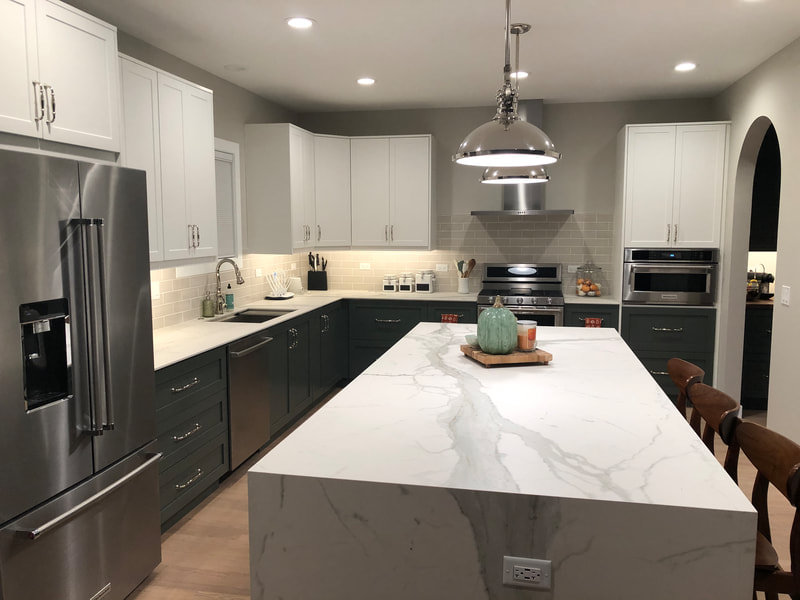
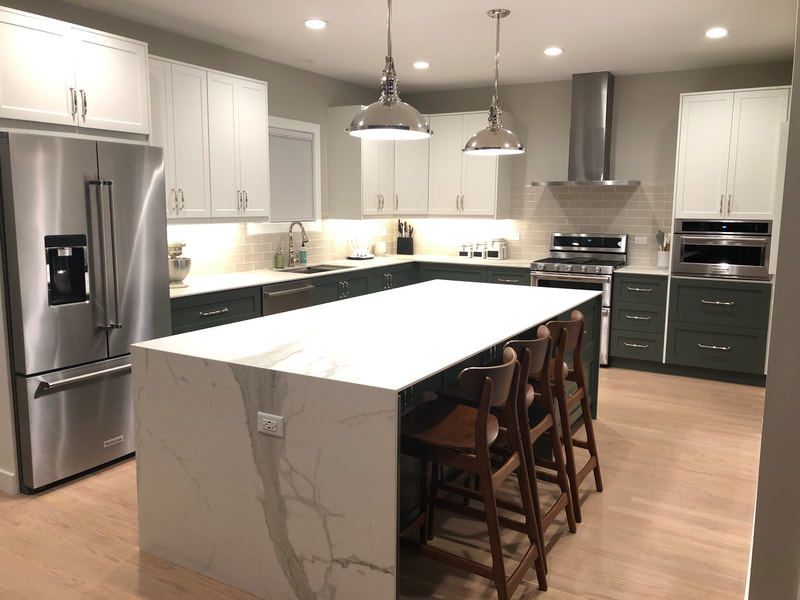
The most common complaint in Chicago kitchen consultations: not enough counter space. The most common solution that doesn't require structural work: a kitchen island or peninsula. A freestanding or built-in island adds 15–30 square feet of counter space, creates a prep zone separate from the cooking zone, provides seating for 2–3 people eliminating the need for a separate dining area in smaller condos, and — when integrated with storage — adds more functional cabinet space than a full wall of upper cabinets.

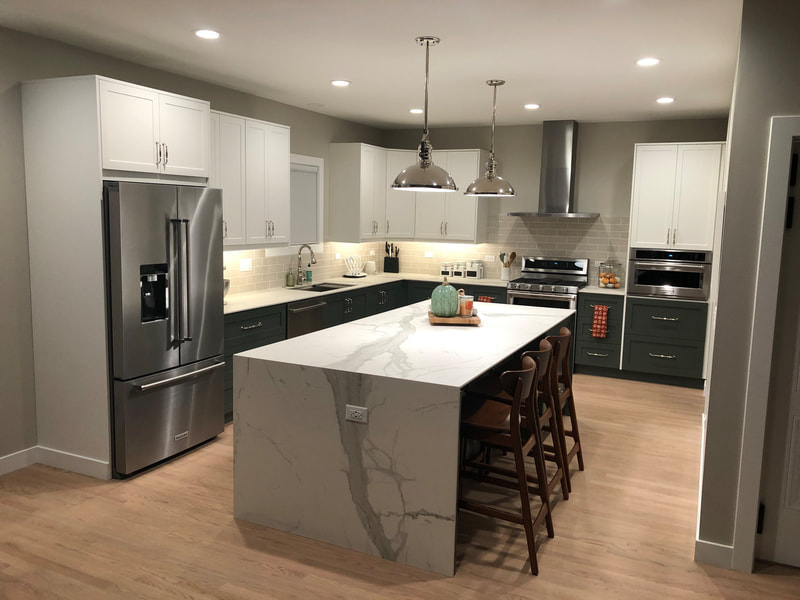
In Chicago's galley kitchens (the dominant layout in vintage Lincoln Park and Lakeview two-flats), a peninsula attached to one end of the galley is often the only option — but it works. It creates an L-shaped workflow, adds seating, and defines the kitchen boundary in open-concept layouts. In larger greystones and North Shore homes, a center island with seating on one side and storage on all four faces is the premier functionality upgrade. Waterfall edge quartzite islands are the 2026 standard in Assembly Squad's premium Chicago kitchen renovations.

Cost: $4,000–$18,000 Impact: High Timeline: included in kitchen scope
4

Layered LED Lighting — The Highest ROI Per Dollar Spent

Poor kitchen lighting is the most common hidden functionality problem in Chicago's older homes — and the easiest to fix. A single overhead fixture creates shadows on every counter surface, making food prep genuinely harder. The solution is three layers: recessed ceiling lights on dimmers for general illumination, under-cabinet LED strips providing direct task lighting on every counter surface, and pendant lights over the island or peninsula for ambient evening light. All three circuits on separate dimmers lets you set the light level for cooking, entertaining, or late-night snacking independently.

In Lakeshore East and Streeterville high-rises where the kitchen may not have a window, proper layered lighting is transformational — it changes the perceived size and warmth of a space more dramatically than any single material change. Lutron smart dimmer integration, appearing in 40%+ of Assembly Squad's 2026 kitchen renovations, allows control of all circuits from one panel or app. Cost: $3,500–$9,000 for a full kitchen lighting package — the highest ROI of any single kitchen upgrade on a per-dollar basis.

Cost: $3,500–$9,000 Impact: Very High per dollar Timeline: 1–2 weeks
5

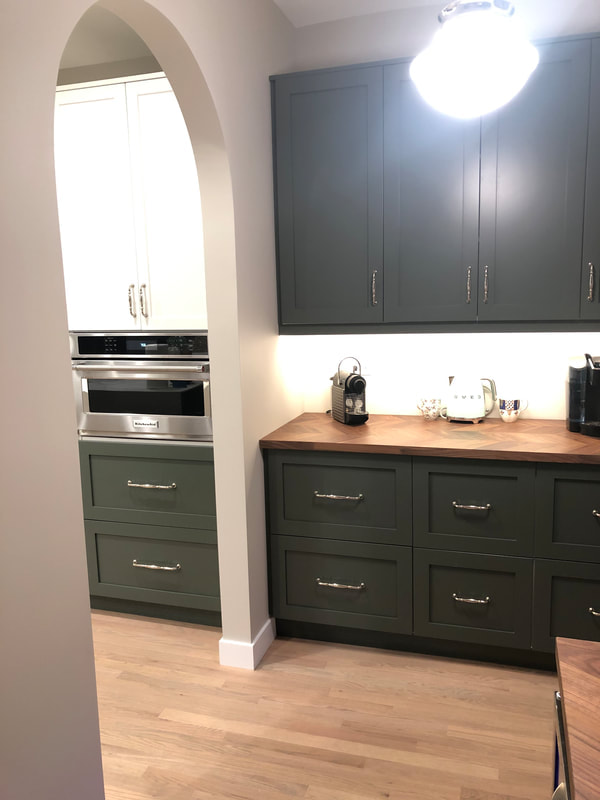
Butler Pantry Addition — Move the Mess Out of the Main Kitchen

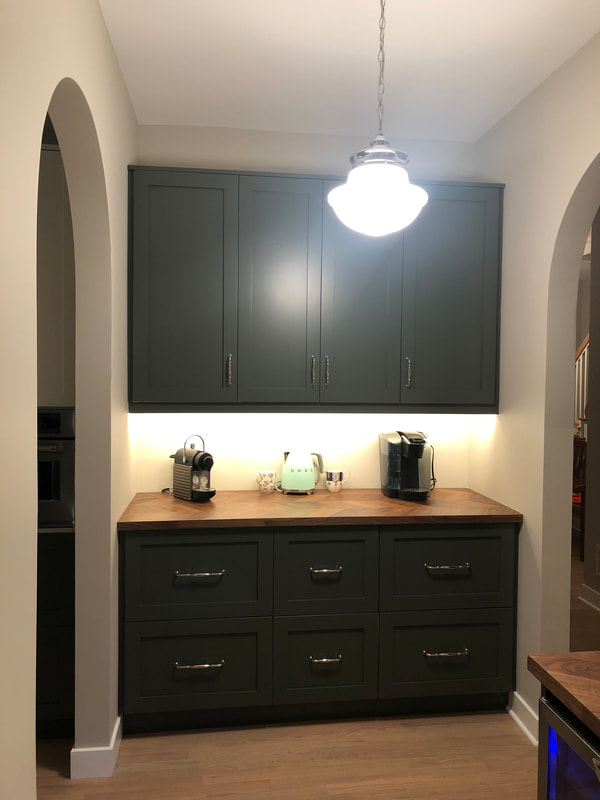
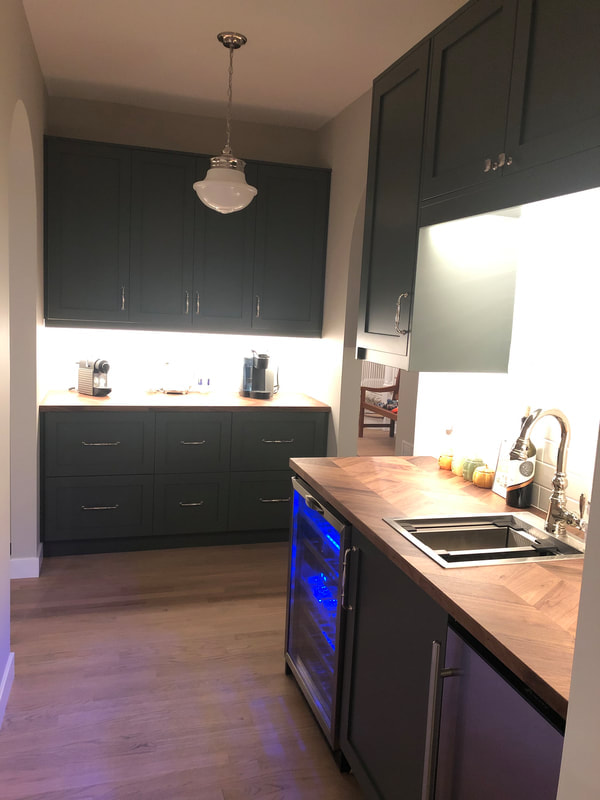
Chicago's Victorian greystones and brownstones were literally built with butler pantries — a service staging room between kitchen and dining room where courses were staged, wine was chilled, and the prep mess was hidden. Post-war renovations removed most of them. In 2026, they're coming back as the single most impactful functionality upgrade for Chicago homes priced above $800K that regularly entertain.

The functional case: a butler pantry moves the wine station, coffee machine, prep dishes, and staging chaos out of the main kitchen entirely. The result is a kitchen that looks pristine all evening while the actual work happens 10 feet away. A closet conversion to butler pantry starts at $25,000. A full room addition runs $45,000–$75,000. Assembly Squad finds a viable conversion candidate in over 80% of Lincoln Park and Gold Coast pre-consultation walkthroughs — usually a coat closet adjacent to the kitchen or an awkward dining room corner. See our full Chicago butler pantry addition guide.

Cost: $25,000–$75,000 Impact: High (for entertainers) Timeline: 3–8 weeks
6

Work Triangle Optimization — Fixing the Layout Before Touching Finishes

The kitchen work triangle — the path between sink, range, and refrigerator — defines how efficiently a kitchen functions regardless of how beautiful it looks. In Chicago's vintage kitchens, the original layout often violates every principle of good work triangle design: the refrigerator blocks a doorway, the sink is on the wrong wall relative to the range, or the three points are too far apart for comfortable cooking. Before spending money on cabinets and countertops, evaluating the work triangle is the most important functional assessment a Chicago homeowner can make.

Assembly Squad's design process starts with work triangle analysis before any material selection. In many cases, moving the refrigerator to a different wall or relocating the sink by 4–6 feet (a plumbing change costing $2,500–$5,000) transforms kitchen functionality more dramatically than any material upgrade. In high-rise condos, plumbing changes must work within the existing riser stack locations — which is why Assembly Squad specifically reviews building plans before designing any kitchen layout change.

Cost: $2,500–$15,000 Impact: High Timeline: included in kitchen scope
7

Integrated Storage — Pull-Out Drawers, Deep Base Cabinets, Appliance Garages

The single biggest wasted space in a Chicago kitchen is the bottom two-thirds of base cabinets. Standard base cabinets with a single shelf and a door are among the least efficient storage systems ever designed — you're reaching past everything to get to what you need. Modern integrated storage transforms this completely: full-extension pull-out drawer systems (Blum Legrabox is the specification-grade standard) make every inch of base cabinet accessible without bending or reaching, deep 21" base drawers replace shelved cabinets for pots and pans, and appliance garages with lift-up doors keep stand mixers and toasters countertop-accessible without occupying permanent counter space.

In Chicago's space-constrained vintage kitchens and high-rise condos, integrated storage optimization can effectively double the usable storage capacity without adding a single cabinet. Assembly Squad includes storage hardware specification in every kitchen design at no extra charge — Blum lifetime-warranted hardware is standard on all Illinois-made cabinet installations.

Cost: $3,000–$8,000 upgrade over standard Impact: High Timeline: included in cabinet scope
8

Appliance Upgrade and Placement — Matching the Kitchen to How You Cook

Builder-standard appliances in Chicago condos — particularly in Lakeshore East, Streeterville, and River North high-rises — were selected for cost, not for how you cook. A 30" gas range with four burners may have been the builder default, but a serious cook needs six burners or a larger oven. A counter-depth refrigerator looks better in an open-concept layout than the 36" depth model that sticks 6" into the walkway. A dishwasher drawer positioned near the dish storage rather than across the kitchen saves 50 steps per load.

Appliance placement is a layout decision made at the cabinet design stage — not an afterthought. Assembly Squad's kitchen designs specify appliance locations before cabinetry is ordered, ensuring refrigerators don't block cabinet doors, dishwashers are adjacent to dish storage, and range placement creates the most efficient work triangle. For high-rise renovations, integrated panel-ready appliances (Sub-Zero, Wolf, Miele, Bosch) eliminate the visual disruption of appliances in open-concept layouts visible from living areas.

Cost: $5,000–$35,000 appliance package Impact: High Timeline: 6–12 week lead on premium brands

Want a More Functional Chicago Kitchen?

Free in-home consultation — we assess your kitchen, identify the highest-impact changes for your specific building type, and deliver a fixed-price proposal within 48 hours.

(312) 544-9150  |  Schedule Free Consultation

HQ: 205 N Michigan Ave · Studio: 2315 N Southport Ave, Lincoln Park · Mon–Fri 9am–6pm · Sat 10am–4pm

Chicago Building Types — Different Functionality Challenges, Different Solutions

Generic kitchen functionality advice ignores the most important variable: what kind of Chicago building you're in. A greystone condo, a high-rise, a two-flat, and a single-family bungalow each require completely different approaches. Here's what Assembly Squad sees in each building type:

Lincoln Park · Lakeview · Bucktown

Greystone & Brownstone Condos

Main challenges: compartmentalized layouts, non-standard dimensions, load-bearing walls between kitchen and dining room, galley layouts with no natural light. Top upgrades: wall removal for open-concept, custom-dimension cabinetry filling every non-standard inch, butler pantry restoration in original pre-1940 spaces, relocation of refrigerator away from doorway blocking positions.

Lakeshore East · Streeterville · River North

Modern High-Rise Condos

Main challenges: builder-grade finishes, limited plumbing riser options, HOA approval required, freight elevator access. Top upgrades: open-concept wall removal exposing lake/river views, integrated panel-ready appliances, custom-dimension cabinetry (builder sizes never fit exactly), layered lighting in kitchens without windows, work triangle optimization within riser constraints.

Lakeview · Wicker Park · Logan Square

Two-Flats & Three-Flats

Main challenges: narrow galley layouts, low ceilings, limited natural light, building permits required for structural changes. Top upgrades: peninsula addition at galley end creating L-shape and seating, full-height custom cabinetry maximizing vertical storage, under-cabinet LED lighting on every surface, appliance right-sizing (smaller but more efficient).

Winnetka · Lake Forest · Glencoe

North Shore Single-Family Homes

Main challenges: original 1950s–1980s layouts with isolated kitchen, outdated work triangle, inadequate storage for larger households. Top upgrades: full kitchen gut with open-concept expansion, butler pantry addition, center island with seating, Sub-Zero/Wolf appliance packages, walk-in pantry storage. Largest scope projects with most layout flexibility.

Bridgeport · Beverly · Irving Park

Chicago Bungalows

Main challenges: small footprint, original 1920s–1940s layout, galley or single-wall kitchen, limited counter space. Top upgrades: custom cabinetry to non-standard ceiling height (bungalow ceilings are often 8'2" — standard cabinets leave a gap), peninsula or island in adjacent dining room, relocation of refrigerator out of galley corridor into pantry niche.

West Loop · Fulton Market

Loft Conversions

Main challenges: open plan with no defined kitchen zone, exposed duct and structural elements limiting cabinet height, industrial aesthetic requiring specific material choices. Top upgrades: peninsula or island defining the kitchen zone within the open loft, custom cabinetry working around exposed structural elements, zone lighting separating kitchen from living area, dark cabinetry complementing industrial character.

Functionality Transformation: The Chandler Condominiums, Lakeshore East

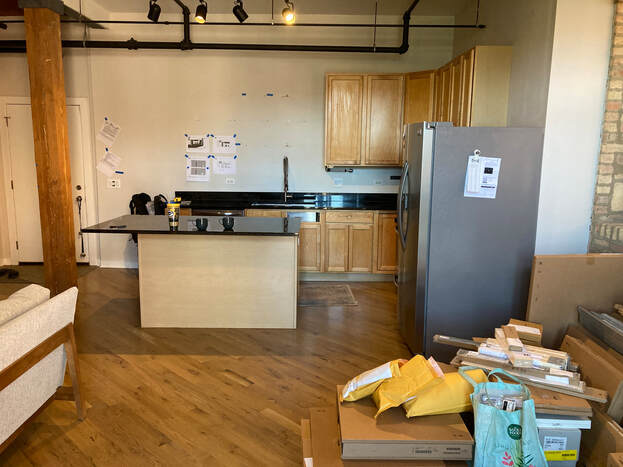
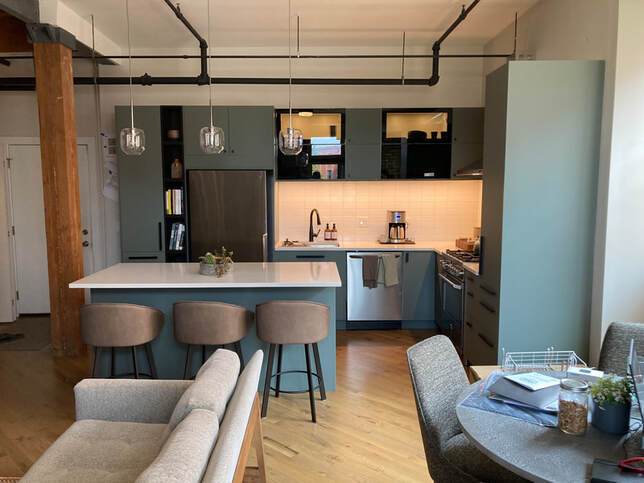
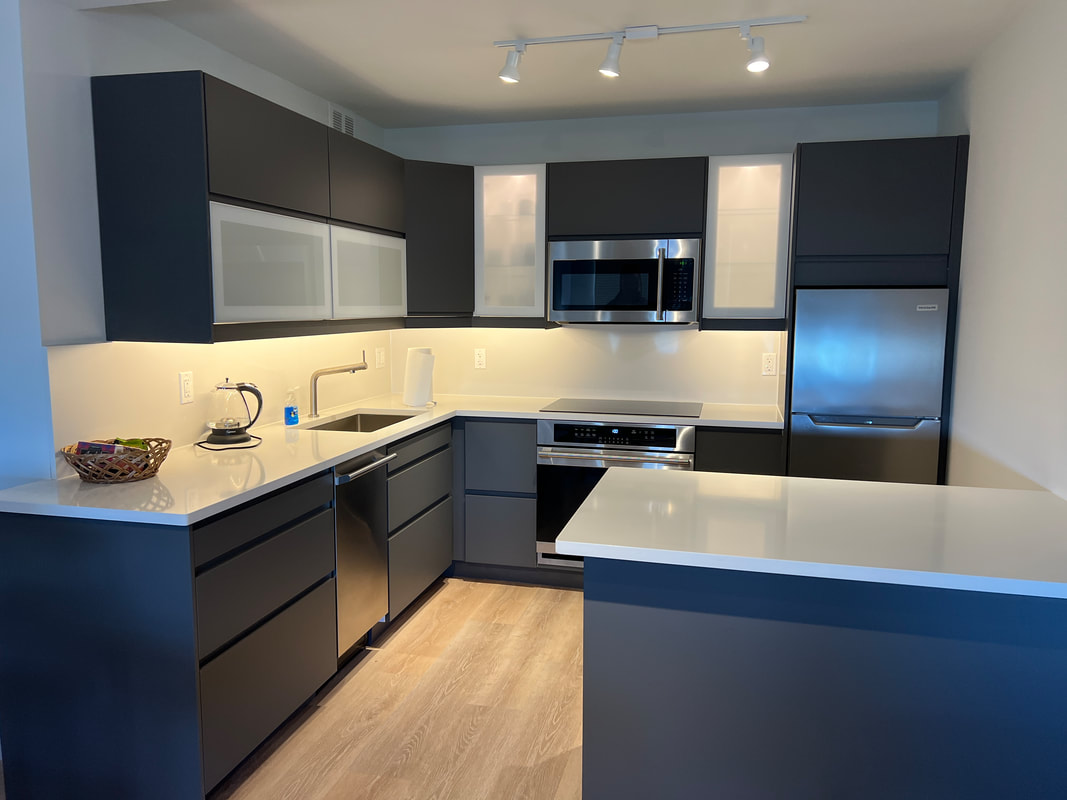
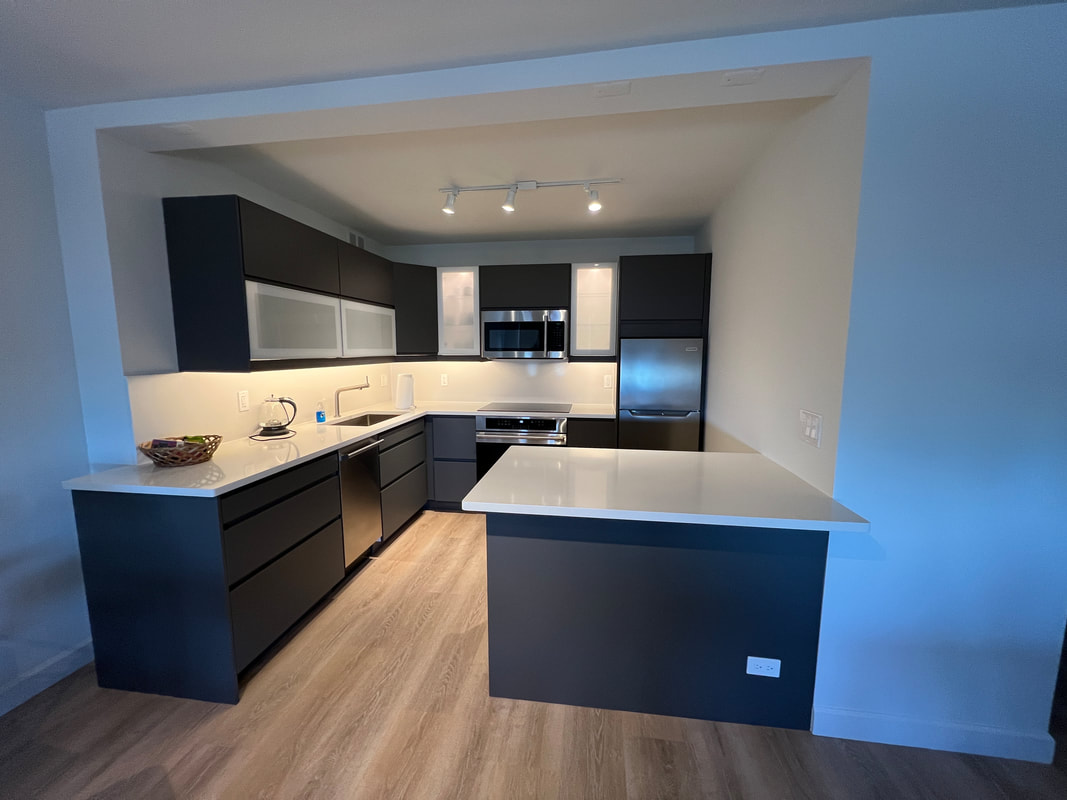
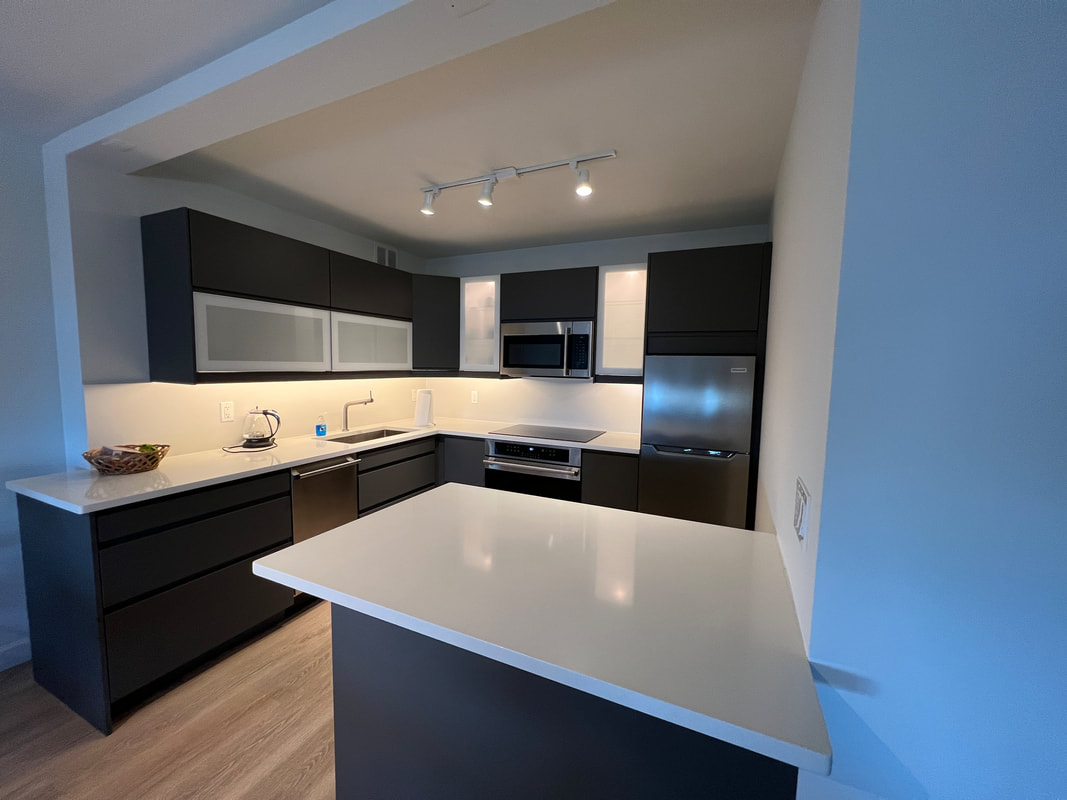
This Lakeshore East high-rise unit is a perfect example of how builder-grade finishes limit kitchen functionality — and what a focused renovation delivers. The original kitchen had honey oak flat-panel cabinets with no interior organization, granite countertops with minimal workspace, a refrigerator blocking the main circulation path, and a single overhead fixture casting shadows on every counter. The renovation addressed five of the eight upgrades above simultaneously.

Before kitchen renovation The Chandler Condominiums 450 E Waterside Dr Chicago -- builder-grade oak cabinets limited counter space poor lighting
Before — Builder-Grade, Low Function
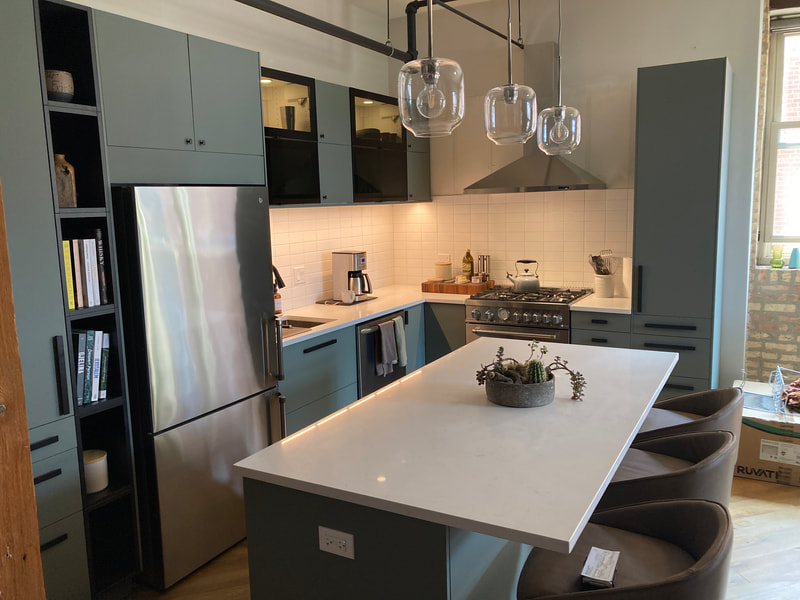
After kitchen renovation The Chandler Condominiums Chicago -- custom cabinetry improved work triangle under-cabinet LED lighting Wolf range by Assembly Squad
After — Custom Cabinetry, Optimized Function

Custom Illinois-made inset shaker cabinetry to exact dimensions · Calacatta quartzite countertops doubling effective workspace · Wolf range replacing builder appliances · Under-cabinet LED lighting on every surface · Optimized work triangle · 6 weeks · HOA-approved · The Chandler, 450 E Waterside Dr, Lakeshore East, Chicago IL 60601

⚠️ The Most Common Kitchen Functionality Mistake Chicago Homeowners Make

Spending on finishes before fixing the layout. Beautiful quartzite countertops on a bad work triangle are still a bad kitchen. Assembly Squad's design process always starts with layout and workflow analysis — where do you prep, cook, plate, and clean — before any material selection happens. If your contractor jumps straight to cabinet styles and countertop choices without asking how you use your kitchen, that's a red flag. Function first, finishes second.

What These Upgrades Return at Resale in Chicago

75–105%
ROI on full kitchen functionality renovations in Chicago's premium neighborhoods

A kitchen that functions better also sells better. In Lincoln Park, Gold Coast, and Lakeshore East, a kitchen renovation addressing layout, storage, and lighting returns 75–105% of its cost at resale — significantly above the national average of 54–72%.

UpgradeApprox. CostChicago ROIBest For
Open-concept wall removal$8,000–$35,00070–90%Vintage greystones, brownstones, two-flats
Custom cabinetry (IL-made)$18,000–$55,00080–100%All Chicago building types
Island or peninsula addition$4,000–$18,00075–90%Kitchens lacking counter space or seating
Layered LED lighting$3,500–$9,00085–95%High-rise condos, windowless kitchens
Butler pantry addition$25,000–$75,00060–80%Homes above $800K, frequent entertainers
Integrated storage hardware$3,000–$8,00080–95%Space-constrained Chicago kitchens
Work triangle optimization$2,500–$15,00085–100%Kitchens with inefficient appliance placement
Appliance upgrade + placement$5,000–$35,00060–75%Lakeshore East, Gold Coast builder-grade units

See Your Functionality Upgrades in 3D Before Construction

Visit our Lincoln Park design studio at 2315 N Southport Ave. Free 3D renderings of your kitchen with every layout change shown before a wall comes down.

(312) 544-9150  |  Book a Studio Visit

Related Guides

Cost guides: Chicago Kitchen Remodel Cost 2026  ·  Lincoln Park Kitchen Remodel Cost

Specific upgrades: Illinois-Made Custom Cabinets Chicago  ·  Chicago Butler Pantry Addition Cost

By neighborhood: Chicago Kitchen Remodeling  ·  Lakeshore East Condo Remodeling  ·  Lincoln Park Condo Remodeling

Trends: Chicago Kitchen & Bathroom Trends 2026  ·  Chicago Home Remodeling Trends 2026

See Our Chicago Kitchen Work

Assembly Squad Chicago kitchen renovation before and after

Visit Our Lincoln Park Design Studio

See full-size Illinois-made cabinet displays, countertop slabs, and storage hardware samples. Get free 3D renderings showing your kitchen layout with every functionality upgrade applied — before construction begins.

Viktor Aharon -- Founder CEO Assembly Squad Remodeling
Viktor Aharon
Founder & CEO, Assembly Squad Remodeling LLC · Est. 2013 · IL License #TGC098779
Viktor has led 500+ Chicago kitchen renovations since founding Assembly Squad in 2013 — across Lincoln Park greystones, Lakeshore East high-rises, Gold Coast townhomes, West Loop lofts, and North Shore single-family homes. EPA Lead-Safe Certified. BBB A+. NARI Chicago Member. NKBA Member. Visit our Lincoln Park design studio at 2315 N Southport Ave or call (312) 544-9150.

Making Your Chicago Kitchen More Functional — FAQ

What is the single most impactful thing I can do to make my Chicago kitchen more functional? +

For most Chicago vintage homes — greystones, brownstones, two-flats — the single most impactful change is removing the wall between the kitchen and dining or living room. This opens natural light, ends the isolation of the cook, creates a flow between rooms, and dramatically changes the perceived size of the kitchen. Most of these walls in pre-1960 Chicago buildings are non-load-bearing and can be removed for $8,000–$18,000. In Lakeshore East and Streeterville high-rises, the same wall removal also exposes lake and river views from the kitchen for the first time. No material upgrade — not quartzite countertops, not new cabinets — delivers the same functional and visual transformation per dollar.

How do I add more counter space to a small Chicago kitchen? +

Four options in order of impact: (1) A peninsula or island — adds 15–30 sq ft of counter space and seating without structural work. In galley kitchens, a peninsula at one end creates an L-shape. (2) Custom cabinetry built to exact dimensions — eliminates the wasted inches that standard cabinets leave at non-standard Chicago wall dimensions. Every recovered inch adds counter depth. (3) Remove upper cabinets over the peninsula or island and replace with floating shelves — visually opens the counter area. (4) Appliance garage upper cabinets — move small appliances off the counter into dedicated garage cabinets with lift-up doors, recovering 4–6 linear feet of counter surface.

What is a kitchen work triangle and why does it matter in Chicago homes? +

The kitchen work triangle is the path between the three primary work zones: sink, range, and refrigerator. Kitchen design research consistently shows that the most efficient kitchens have these three points within 4–9 feet of each other, with no obstacles (islands, doors, cabinets) blocking the paths between them. In Chicago's vintage kitchens — particularly greystones and brownstones with compartmentalized layouts — the original work triangle is often broken: the refrigerator blocks a doorway, the sink is on the wrong wall, or the triangle is too large for efficient movement. Fixing the work triangle through appliance relocation or layout change costs $2,500–$15,000 and delivers a more functional kitchen than any finish upgrade.

Do I need HOA approval to make my Chicago condo kitchen more functional? +

It depends on the scope. Cabinet replacement and countertop swaps typically don't require HOA approval — they're cosmetic changes within the unit. However, plumbing changes (moving the sink, adding a dishwasher), electrical work (new circuits for appliances), structural changes (wall removal), and HVAC modifications always require HOA approval in Chicago condo buildings before city permits can be issued. Assembly Squad achieves a 97% first-submission HOA approval rate because we know what Lakeshore East, Gold Coast, River North, and Lincoln Park building boards require. HOA coordination is included in every Assembly Squad project at no extra charge.

How much does it cost to make a Chicago kitchen more functional? +

It depends on which upgrades you pursue. Individual upgrades: lighting package $3,500–$9,000; island or peninsula $4,000–$18,000; integrated storage hardware $3,000–$8,000; work triangle optimization $2,500–$15,000; open-concept wall removal $8,000–$35,000; custom cabinetry $18,000–$55,000; butler pantry $25,000–$75,000. A focused functionality renovation combining lighting, storage, and one structural change typically runs $25,000–$55,000. A full kitchen gut renovation addressing all eight upgrades simultaneously runs $55,000–$150,000+ depending on finishes. All Assembly Squad proposals are fixed-price with no surprise change orders. See our full Chicago kitchen remodel cost guide.

What storage upgrades make the biggest difference in a Chicago kitchen? +

In order of impact: (1) Pull-out drawer systems replacing shelved base cabinets — Blum Legrabox full-extension drawers make every inch of base cabinet accessible, eliminating the reaching and blind searching that plagues standard cabinet storage. (2) Deep 21-inch base drawers for pots, pans, and baking sheets — replacing the shelf-and-door combination that makes these items hardest to access. (3) Appliance garages — dedicated upper cabinet sections with lift-up doors that keep stand mixers, toasters, and coffee machines countertop-accessible without occupying permanent counter space. (4) Tall pantry cabinets — floor-to-ceiling storage columns maximizing vertical space, particularly effective in Chicago kitchens that can't expand horizontally.

Can I make a galley kitchen more functional without knocking down walls? +

Yes — galley kitchens in Chicago two-flats and vintage condos can be significantly improved without structural work. The most impactful non-structural changes: (1) Peninsula addition at the open end of the galley creates an L-shape, adds counter space, and provides seating without touching walls. (2) Custom full-height cabinetry to exact ceiling height maximizes vertical storage in the existing footprint. (3) Under-cabinet LED lighting on every surface — galley kitchens are often dark due to the narrow corridor; proper task lighting transforms usability. (4) Deep base drawers replacing shelved lower cabinets dramatically increase accessible storage. (5) Removing upper cabinets on one side and replacing with floating shelves opens the galley visually, reducing the corridor feel.

What appliance changes make a Chicago kitchen more functional? +

The three most impactful appliance changes: (1) Counter-depth refrigerator — a 30" or 36" counter-depth model sits flush with your cabinetry rather than protruding 6" into the walkway. In Chicago's galley kitchens and high-rise condos, this reclaimed 6" changes the entire feel of the circulation path. (2) Dishwasher placement adjacent to dish storage — moving the dishwasher to be directly below or next to the cabinet where dishes are stored saves 20–40 steps per load; over a year this is meaningful. (3) Integrated range hood — replacing a microwave-hood combination over the range with a proper ventilation hood dramatically improves air quality and allows a true professional range to function as designed.

How does kitchen functionality differ between a greystone and a high-rise condo in Chicago? +

Significantly. Greystone challenges: compartmentalized layout from 1880–1930 era, non-standard dimensions requiring custom cabinetry, load-bearing walls between kitchen and dining room that require structural analysis before removal, and galley or L-shaped kitchens with no island space. Solutions: wall removal, butler pantry restoration, custom cabinetry. High-rise condo challenges: builder-grade finishes with no interior organization, plumbing limited by riser stack locations, HOA approval required for all structural and mechanical work, and a kitchen that may have no window. Solutions: integrated panel-ready appliances, custom-dimension cabinetry, layered lighting to compensate for no natural light, and open-concept wall removal to borrow light from the living area.

What is the first thing I should fix to make my Chicago kitchen more functional? +

Before spending money on anything, evaluate the layout — specifically the work triangle. Walk through a typical cooking session in your kitchen and note: where do you trip over yourself? Where do you have to set things down because there's no counter space nearby? Where do you reach past one thing to get to another? These friction points tell you exactly what to fix first. In Assembly Squad's experience, 70% of Chicago kitchen functionality problems are solved by one of three changes: relocating the refrigerator, adding a peninsula or island, or removing the wall to the adjacent room. Get the layout right first. Then invest in finishes.

Ready to Make Your Chicago Kitchen Work the Way You Live?

Fixed-price proposals. Illinois-made cabinetry. Free 3D renderings. Same-day site visits across Chicago and the North Shore.

(312) 544-9150  |  Get Your Free Estimate

HQ: 205 N Michigan Ave, Chicago · Studio: 2315 N Southport Ave, Lincoln Park

Assembly Squad
Remodeling

Chicago's boutique design-build remodeling company since 2013. Kitchen, bathroom, condo, basement, and whole-home renovations across Chicago and the North Shore.

IL #TGC098779
A+ BBB
NARI Chicago
NKBA Member
EPA Lead-Safe
$2M Insured
G H

Services

  • Kitchen Remodeling
  • Bathroom Renovation
  • Condo Remodeling
  • Basement Finishing
  • Whole Home Renovation
  • Attic Conversions
  • Custom Cabinets
  • Design-Build Studio

Explore

  • About Us
  • All Services
  • Project Portfolio
  • Service Areas
  • Lincoln Park Studio
  • North Shore
  • Blog
  • Contact Us

Contact

Phone(312) 544-9150
Headquarters205 N Michigan Ave, Suite 810
Chicago, IL 60601
Lincoln Park Studio2315 N Southport Ave
Chicago, IL 60614

Mon–Fri 9–6 · Sat 10–4

Chicago Neighborhoods

Lincoln Park · Gold Coast · River North · Lakeview · Wicker Park · West Loop · Bucktown · Logan Square · + more →

North Shore

Winnetka · Lake Forest · Highland Park · Evanston · Wilmette · Northbrook
Assembly Squad Remodeling LLC · All Rights Reserved ©2013–2026 · IL License #TGC098779 · A+ BBB · NARI Chicago
Privacy Policy Get a Free Estimate
  • Home
  • About Us
  • Services
  • GET FREE ESTIMATE
  • Portfolio
  • Service Area
  • Blog