• Home
  • About Us
  • Services
  • GET FREE ESTIMATE
  • Portfolio
  • Service Area
  • Blog
Kitchen,Bath,Condo Remodeling In Chicago| Assembly Squad
  • Home
  • About Us
  • Services
  • GET FREE ESTIMATE
  • Portfolio
  • Service Area
  • Blog
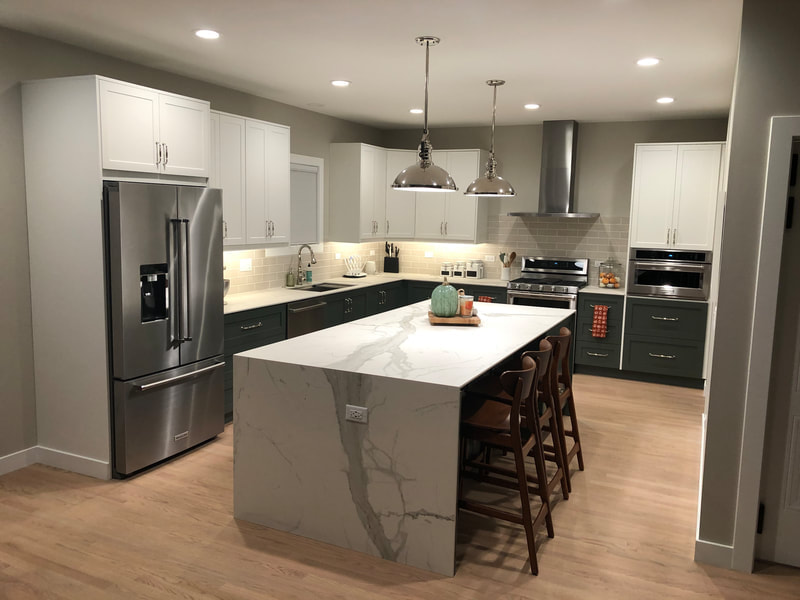
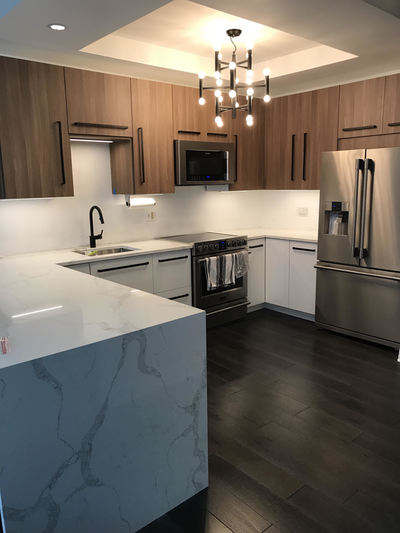
Modern kitchen remodel ideas Chicago 2026 - white quartz countertops with waterfall island
✓ Updated February 2026

Chicago Kitchen Remodel Ideas 2026: Design Trends, Smart Layouts & Real Costs

Modern design ideas, space-saving layouts, and real pricing for Chicago kitchen renovations — from vintage bungalows to downtown high-rises
Viktor - Assembly Squad Founder
Viktor
February 5, 2026
18 min read

Quick Answer: Best Chicago Kitchen Remodel Ideas for 2026

Modern Industrial · Warm Minimalism · Classic Craftsman · Smart Kitchen Tech

The top kitchen design trends for Chicago homes in 2026 include modern industrial aesthetics (perfect for lofts and West Loop), warm minimalism with European slab-front cabinetry, classic craftsman styles for bungalows and vintage homes, and integrated smart kitchen technology. Budget $25,000–$150,000+ depending on scope. Smart layout changes — like opening galley kitchens or adding islands — deliver the highest ROI at 70–95%. See full cost breakdown →

2026 Chicago Kitchen Remodel Costs at a Glance

Kitchen remodels in Chicago cost $25,000–$150,000+ in 2026, with most homeowners spending $45,000–$75,000 for a full renovation. Material costs have stabilized after 2021–2024 volatility. Budget refreshes run $25,000–$40,000, mid-range remodels $45,000–$85,000, and luxury transformations $90,000–$150,000+. Vintage Chicago homes add 15–20% for structural surprises. ROI averages 70–85%, but smart design choices can push returns to 95%. Read our full 2026 cost guide →

Your Chicago kitchen is stuck in 1987 — avocado appliances, cramped galley layout, and zero counter space. Sound familiar? After transforming over 500 Chicago kitchens since 2013, Assembly Squad knows exactly what works in our unique homes. From maximizing tiny Lincoln Park condos to opening up closed-off bungalow kitchens, we've mastered the art of Chicago kitchen design.

Chicago kitchens face challenges you won't find anywhere else: century-old plumbing, load-bearing walls everywhere, and layouts designed when an icebox was high-tech. But here's the good news — modern design solutions can transform even the most challenging spaces. Whether you're working with 80 square feet or 800, the right approach creates a kitchen that actually works for how you live.

The kitchen remains your home's best investment. In Chicago's competitive market, an updated kitchen returns 70–85% at resale and sells homes 25% faster. But beyond ROI, it's about daily life — cooking without bumping elbows, hosting without apologizing for your space, and finally having somewhere to put that stand mixer. Visit our Lincoln Park design studio to explore materials in person, or keep reading to discover what's possible for your Chicago kitchen.

Chicago Kitchen Remodel ROI 2026

70–95% Return

Minor remodel (under $40K): 85–95% ROI
Major remodel ($40–85K): 70–80% ROI
Luxury remodel ($85K+): 60–70% ROI
Average home value increase: $35,000–$65,000

Top Kitchen Design Trends for Chicago Homes in 2026

Chicago's kitchen design scene balances modern functionality with our architectural heritage. Here are the five trends dominating renovations across the city right now:

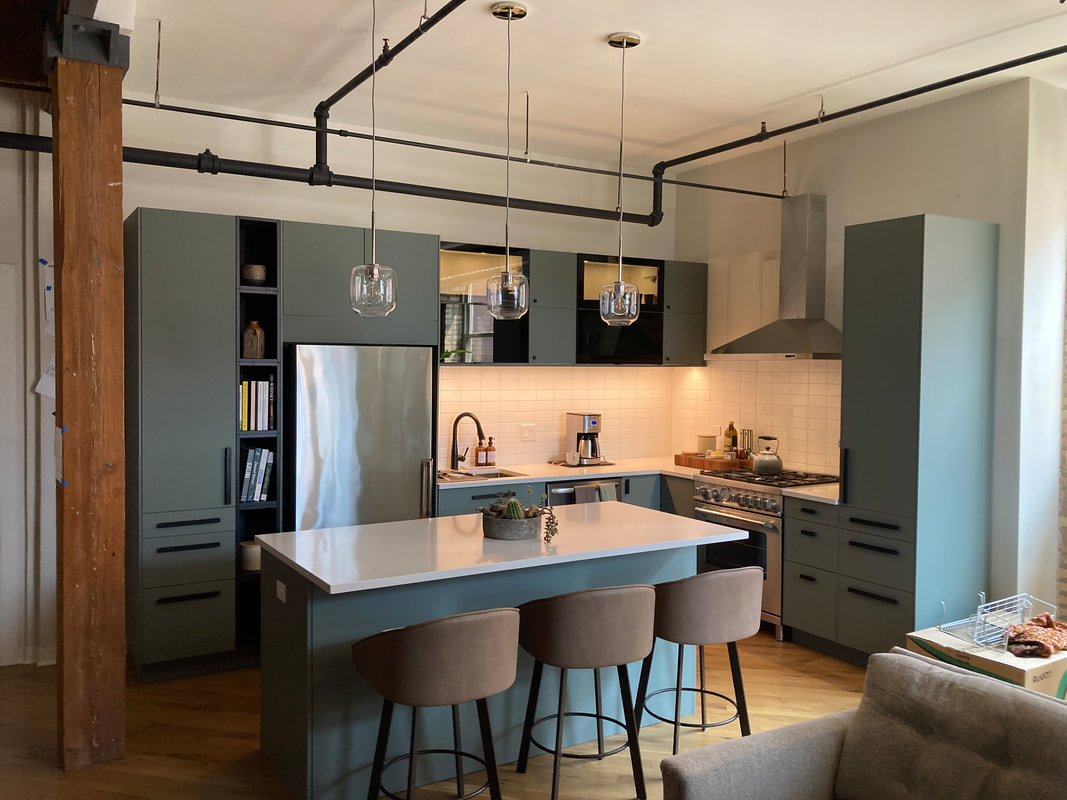
1. The Modern Industrial Look

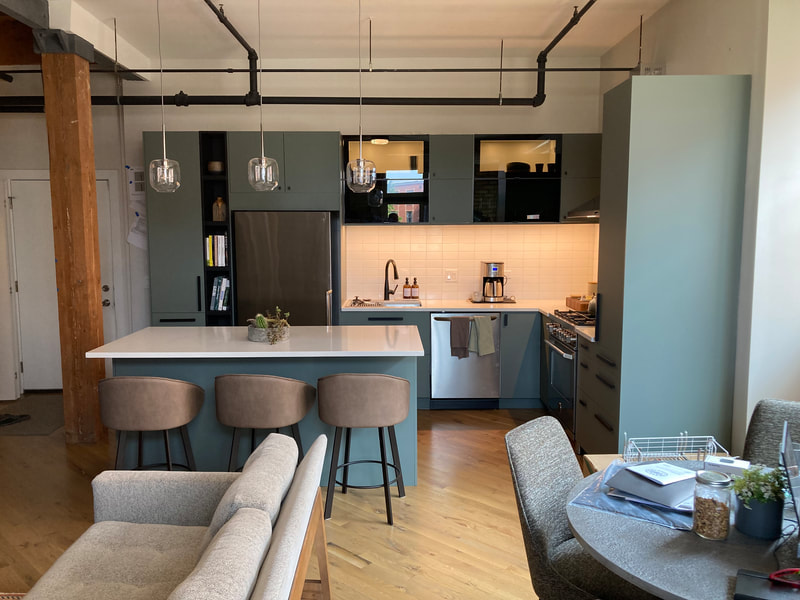
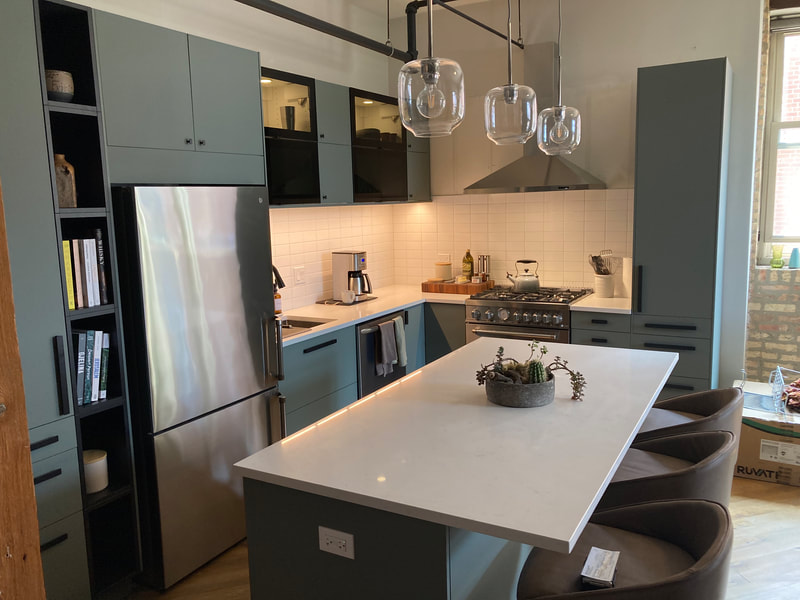
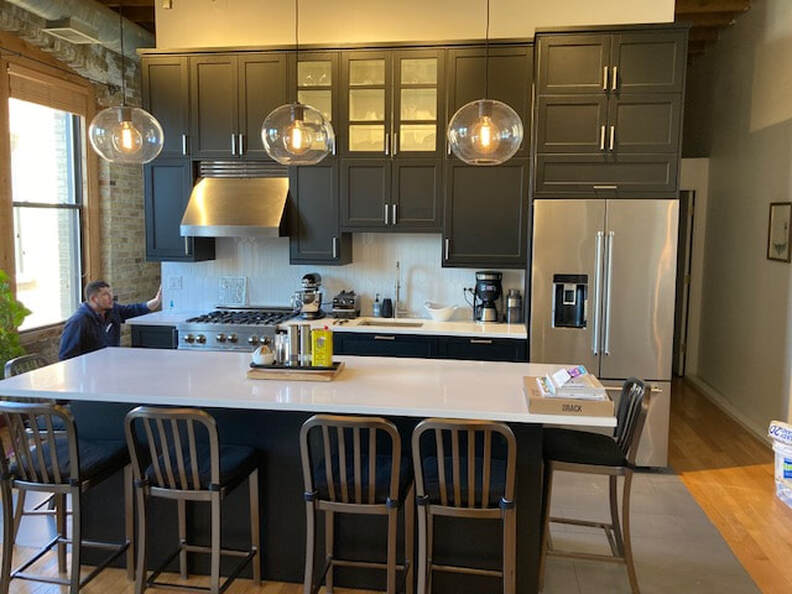
Perfect for: Lofts, converted spaces, West Loop homes
  • Key elements: Exposed brick, black metal fixtures, concrete countertops
  • Cabinetry: Two-tone with dark lowers, light uppers
  • Hardware: Matte black or aged brass pulls
  • Lighting: Edison bulbs, metal pendants, track lighting
  • Why it works in Chicago: Complements the city's industrial architectural DNA — particularly in converted loft buildings and warehouse-style spaces
  • Cost impact: Adds $5,000–$8,000 vs. traditional finishes

2. Warm Minimalism (2026's Breakout Trend)

Perfect for: Modern townhomes, new construction, updated condos
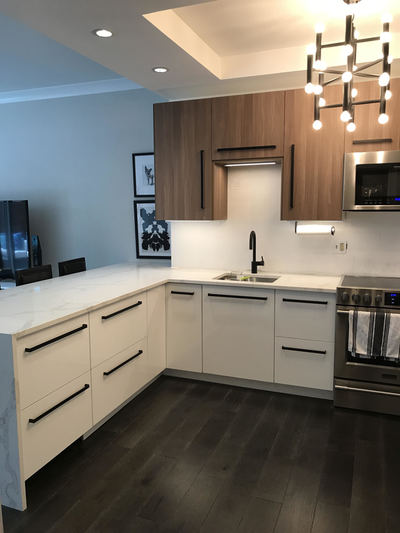
  • Signature style: European slab-front cabinetry, integrated handles, warm wood tones
  • Color palette: Warm whites, creamy taupes, honey oak, mushroom tones
  • Countertops: Light-veined quartz or sintered stone with organic movement
  • Hardware: Hidden or minimal — push-to-open systems, finger-pull profiles
  • Why it works in Chicago: Creates calm, inviting spaces that counterbalance our harsh winters — warm tones fight the gray-sky months
  • Cost impact: European-style cabinetry adds $3,000–$6,000 vs. standard shaker

3. Classic Chicago Craftsman

Perfect for: Bungalows, vintage homes, Oak Park properties
  • Signature style: Shaker cabinets, subway tile, farmhouse sinks
  • Wood tones: White oak, walnut, restored original floors
  • Backsplash: Classic white subway with dark grout
  • Details: Crown molding, glass-front upper cabinets
  • Why it works in Chicago: Maintains your home's architectural integrity — essential for preserving value in historic neighborhoods
  • Cost impact: Neutral — standard pricing, no premium

4. Scandinavian Minimalist

Perfect for: Small condos, River North high-rises, modern townhomes
  • Color palette: White, light gray, natural wood accents
  • Storage: Handle-free cabinets, hidden appliances, integrated fridge panels
  • Surfaces: Quartz countertops, matte finishes throughout
  • Why it works in Chicago: Maximizes light and perceived space in compact kitchens — critical for Chicago condos where every square foot counts
  • Cost impact: Budget-friendly — clean lines cost less than ornate details

5. Integrated Smart Kitchen (2026 Tech Trend)

Perfect for: Tech-forward homeowners, new builds, high-end renovations
  • Key elements: Touchless faucets, smart ranges with Wi-Fi, under-cabinet tablet mounts
  • Lighting: Color-temperature adjustable LEDs controlled by app or voice
  • Storage: Motorized upper cabinets, automated pantry pull-outs
  • Appliances: Connected refrigerators with inventory management, induction cooktops with precision control
  • Why it works in Chicago: Smart lighting compensates for our dark winters, voice-controlled hood vents are ideal for small spaces, and smart leak detectors protect against pipe issues in vintage buildings
  • Cost impact: Adds $4,000–$12,000 depending on scope

Smart Layouts for Chicago's Challenging Spaces

Galley Kitchen Solutions (Most Common in Chicago)

The galley layout is Chicago's default — typically 7x12 feet in bungalows and vintage two-flats. Here's how to maximize every inch:

  • Open one wall: Remove non-load-bearing wall to dining room ($3,000–$8,000)
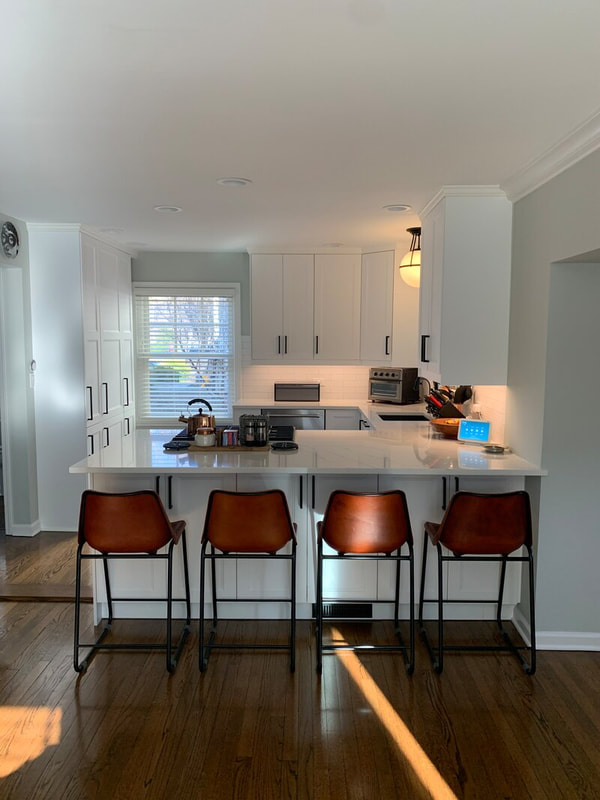
  • Add peninsula: Creates prep space and casual seating without a full island
  • Vertical storage: Floor-to-ceiling cabinets maximize unused airspace
  • Light colors: White or light gray makes narrow spaces feel wider
  • Under-cabinet lighting: Eliminates shadows in tight quarters
  • Pro tip: Keep the work triangle tight — sink, stove, and fridge within a 4–9 foot triangle

Read more in our Chicago galley kitchen remodel guide.

L-Shaped Layout (Best for Chicago Bungalows)

If you have a square or near-square kitchen footprint, the L-shape maximizes usable counter space while opening up the room:

  • Corner optimization: Lazy Susans or blind-corner pull-outs reclaim dead space ($400–$1,200)
  • Island opportunity: L-shapes create room for a 4x5 foot island if total space exceeds 10x12 feet
  • Natural flow: Keeps the work triangle efficient while leaving one wall open to dining area
  • Best for: Chicago bungalows, ranch homes, and first-floor units in two-flats
  • Cost advantage: Fewer cabinets per linear foot vs. U-shaped — saves $2,000–$5,000

Open Concept Transformation

The single most impactful change for dated Chicago homes — removing a wall between kitchen and living/dining area:

  • Load-bearing beam: Replace wall with structural beam ($5,000–$12,000 including engineering)
  • Island addition: 4x7 feet is ideal for most Chicago spaces
  • Consistent flooring: Unifies kitchen with adjacent rooms
  • Permit required: Structural changes need Chicago building department approval
  • Timeline impact: Adds 2–3 weeks for structural engineering and permits
  • ROI boost: Open layouts add 10–15% more value at resale

Real Cost Breakdown: Chicago Kitchen Remodels 2026

Remodel Level Total Cost What's Included Timeline Best For
Refresh $25,000–$40,000 Cabinet refacing, new countertops, appliances, paint 3–4 weeks Quick sale prep, rental properties
Standard $45,000–$65,000 New cabinets, mid-range appliances, tile backsplash 6–8 weeks Most Chicago homeowners
Premium $65,000–$85,000 Custom cabinets, stone counters, high-end appliances 8–10 weeks Forever homes, entertainers
Luxury $90,000–$150,000+ Designer cabinets, pro appliances, structural changes 10–14 weeks High-end properties, serious home cooks

Want the full cost deep-dive with per-square-foot pricing, neighborhood variations, and hidden cost warnings? Read our complete Chicago kitchen remodel cost guide.

Space-Saving Ideas for Small Chicago Kitchens

Storage Maximizers

  • Pull-out pantry systems ($800–$1,500)
  • Corner lazy Susans ($400–$800)
  • Drawer organizers ($300–$600)
  • Ceiling-mounted pot racks ($200–$500)
  • Toe-kick drawers ($400–$700)
  • Magnetic knife strips ($50–$150)

Visual Space Tricks

  • Glass cabinet doors ($2,000–$4,000)
  • Mirror backsplashes ($800–$1,500)
  • Continuous countertops ($3,000–$6,000)
  • Floating shelves ($300–$800)
  • Light color schemes throughout
  • Recessed lighting ($1,500–$3,000)

Chicago-Specific Renovation Challenges to Know

⚠️ Hidden Costs in Chicago Kitchens

  • Asbestos flooring: Common in pre-1980 buildings, removal costs $2,000–$5,000
  • Lead paint: Required remediation in pre-1978 homes ($1,500–$4,000)
  • Galvanized plumbing: Must replace if found in pre-1965 buildings ($3,000–$6,000)
  • Electrical upgrades: Older homes often need new circuits and panel upgrades ($2,000–$5,000)
  • Permit fees: Chicago permits run $302–$2,500 (minimum fee updated January 2025)
  • Condo requirements: HOA approval ($200–$700 fees), freight elevator scheduling, sound insulation
  • Disposal fees: Chicago charges extra for construction waste ($500–$1,500)

Budget tip: Always set aside 15–20% contingency for surprises. In Chicago's older housing stock, it's not if you'll find something — it's what you'll find.

Best Materials for Chicago's Climate

Countertop Choices

  • Quartz ($50–$100/sq ft): Best overall — no sealing, handles temperature changes beautifully
  • Granite ($45–$80/sq ft): Classic choice, needs annual sealing in Chicago's variable climate
  • Butcher block ($40–$70/sq ft): Warm look, requires extra maintenance during dry winters
  • Concrete ($65–$135/sq ft): Industrial look, highly customizable for loft spaces
  • Laminate ($20–$40/sq ft): Budget-friendly, significantly better quality than a decade ago

Flooring That Survives Chicago

  • Luxury vinyl plank ($3–$8/sq ft): Waterproof, handles temperature swings — top seller in 2026
  • Porcelain tile ($4–$12/sq ft): Extremely durable, cold underfoot without radiant heat
  • Engineered hardwood ($6–$14/sq ft): More stable than solid wood in our climate swings
  • Polished concrete ($3–$7/sq ft): Modern, works beautifully with radiant heat systems
  • Cork ($4–$8/sq ft): Warm, comfortable underfoot, eco-friendly option

Chicago Kitchen Transformation Gallery

See real kitchen remodels we've completed across Chicago neighborhoods at every price point

Play: Assembly Squad Chicago Kitchen Remodel Projects

Island Dreams: Making It Work in Chicago Kitchens

Kitchen Island Planning Guide

Minimum kitchen size: 10×12 feet
  • Clearance required: 36" minimum on all sides (42" preferred for traffic flow)
  • Ideal size: 4×7 feet for most Chicago kitchens
  • Multi-function: Prep space + storage + casual dining in one piece
  • Electrical needs: Chicago code requires outlets on islands
  • Plumbing option: Add prep sink ($2,000–$4,000 extra)
  • Waterfall edge: 2026's most requested island upgrade — adds $1,500–$3,000
  • Mobile alternative: Rolling islands for tight spaces ($500–$2,000)

Smart Appliance Choices for Chicago Living

Space-Saving Appliances

  • Counter-depth refrigerators (saves 6")
  • Slide-in ranges (seamless look)
  • Drawer dishwashers (24" or 18")
  • Built-in microwaves (frees counter)
  • Compact garbage disposals
  • Under-cabinet hood vents

Splurge vs. Save

  • Splurge: Range/cooktop (daily use)
  • Splurge: Dishwasher (quieter models)
  • Save: Refrigerator (less difference)
  • Save: Microwave (basic works fine)
  • Splurge: Hood vent (better extraction)
  • Save: Garbage disposal

Lighting Layers for Chicago's Dark Winters

Three-Layer Lighting System

Chicago averages just 84 clear days per year. A well-designed lighting plan isn't optional — it's essential:

  • Ambient: Recessed lights every 4–6 feet ($150–$300 each installed)
  • Task: Under-cabinet LEDs for prep areas ($300–$800 total)
  • Accent: Pendants over island or peninsula ($200–$600 each)
  • Natural light: Larger windows if possible ($1,500–$3,000 per window)
  • Dimmer switches: Essential for ambiance control ($50–$150 each)
  • Color temperature: 3000K–3500K for warm, inviting feel
  • 2026 upgrade: Tunable white LED systems that adjust color temperature throughout the day ($600–$1,200)

Timeline Reality: Chicago Kitchen Remodel 2026

Typical Project Timeline

  • Week 1–2: Design finalization, material selection at our Lincoln Park showroom
  • Week 3: Permit applications (Express Permit Program: 5–10 day approval)
  • Week 4–5: Material ordering, permit approval wait
  • Week 6: Demolition (2–3 days)
  • Week 7: Rough plumbing and electrical
  • Week 8: Drywall, flooring prep
  • Week 9–10: Cabinet installation
  • Week 11: Countertop templating and installation
  • Week 12: Backsplash, finishing touches
  • Week 13: Final inspections, punch list, walkthrough

Neighborhood-Specific Design Considerations

Condo / High-Rise Rules

  • HOA approval required (2–8 weeks)
  • Work hours restricted (9–5 typically)
  • Freight elevator scheduling required
  • Soundproofing requirements
  • Plumbing stack limitations
  • $2M+ insurance certificates needed

Read our full condo remodeling guide for HOA timelines, costs, and logistics.

Vintage Home Surprises

  • Knob-and-tube wiring replacement
  • Uneven floors need leveling
  • Plaster walls vs. drywall transitions
  • Smaller doorways for appliance delivery
  • Steam radiator relocation
  • Historical district restrictions

Ready to Explore Ideas for Your Chicago Kitchen?

Visit our Lincoln Park design studio to see materials, explore design options, and get a transparent estimate — no pressure, no surprises.

Call (312) 544-9150 Request Free Estimate

◻ 2315 N Southport Ave, Chicago, IL 60614 · Mon–Fri 9am–6pm · Sat 10am–4pm

A kitchen remodel transforms how you experience your Chicago home every single day. Whether you're working with a cramped galley in Wicker Park or opening up a closed-off layout in Edison Park, the right design approach makes all the difference. The key is balancing your wishlist with Chicago's realities — from permit requirements to structural limitations to the materials that actually survive our climate.

Smart planning prevents budget blowouts and timeline delays. Start with a realistic budget that includes a 15–20% contingency for Chicago's inevitable surprises. Work with contractors who understand local building codes and have experience with your type of property. And remember — the best kitchen isn't the most expensive one, it's the one designed for how you actually live.

Ready to transform your Chicago kitchen? Contact Assembly Squad for a free consultation. We'll evaluate your space, discuss design possibilities, and provide transparent pricing — whether you're planning a budget refresh or a full luxury transformation. Explore our Chicago kitchen remodeling page for more details, or check out our bathroom remodeling services if you're considering multiple projects.

Recent Chicago Kitchen Transformations

Real examples at different price points across Chicago neighborhoods

Lincoln Park greystone kitchen remodel with quartz countertops

Lincoln Park Greystone

Mid-range: $78,500

River North condo kitchen renovation with waterfall island

River North Condo

High-end: $112,000

Bucktown bungalow budget kitchen refresh

Bucktown Bungalow

Budget: $38,500

Kitchen Remodel Experts Since 2013

Visit Assembly Squad — Two Chicago Locations

See materials in person, explore design options, and meet our team

□ Lincoln Park Design Studio — 2315 N Southport Ave, Chicago, IL 60614
□ Main Office — 205 N Michigan Ave, Suite 810, Chicago, IL 60601
Viktor - Founder & CEO of Assembly Squad Remodeling

About Viktor

Viktor is the Founder and CEO of Assembly Squad Remodeling LLC, a Chicago-based design-build remodeling company he has operated since 2013. With Illinois General Contractor License TGC098779 and over 500 completed kitchen projects across Chicago and the North Shore suburbs, Viktor brings hands-on expertise to every consultation. His team maintains an A+ BBB rating and specializes in transforming Chicago's unique housing stock — from vintage greystones and bungalows to modern condos and high-rises. Visit our Lincoln Park design studio at 2315 N Southport Ave for a free consultation.

Chicago Kitchen Remodel Ideas: Your Questions Answered

What are the best kitchen design styles for Chicago homes in 2026?

+

The top kitchen design styles for Chicago homes in 2026 are modern industrial (ideal for lofts and West Loop spaces), warm minimalism with European slab-front cabinetry (the breakout trend this year), classic craftsman (perfect for bungalows and vintage homes), Scandinavian minimalist (best for condos and smaller kitchens), and integrated smart kitchens with connected appliances and adaptive lighting. The best style depends on your home's architecture — preserving architectural integrity is especially important in Chicago's historic neighborhoods like Lincoln Park, Wicker Park, and Oak Park where buyers expect design choices that respect the home's character.

What kitchen layout works best in a Chicago bungalow?

+

L-shaped layouts work best in Chicago bungalows because they maximize counter space while keeping the room open. Most Chicago bungalow kitchens are 10x10 to 12x14 feet — large enough for an L-shape with a small island or peninsula. If your bungalow has the classic galley layout, opening one wall to the dining room ($3,000–$8,000) creates dramatically better flow. For square kitchens, corner optimization with lazy Susans or blind-corner pull-outs reclaims dead space. Floor-to-ceiling cabinets are essential for storage in bungalows since closet space is typically limited.

How much does a kitchen remodel cost in Chicago in 2026?

+

Kitchen remodels in Chicago cost $25,000–$150,000+ in 2026. Budget refreshes (cabinet refacing, new countertops, appliances) run $25,000–$40,000. Standard full remodels with new cabinets cost $45,000–$65,000. Premium renovations with custom cabinets and high-end appliances range $65,000–$85,000. Luxury transformations with structural changes exceed $90,000. Per square foot costs range from $175–$450. Chicago's older homes often add 15–20% for surprises like lead paint, asbestos, or outdated wiring. Condo remodels may add 15–22% due to HOA requirements and restricted work hours. Material costs have stabilized in 2026 after years of volatility.

Can I add a kitchen island in my Chicago home?

+

You can add a kitchen island if your kitchen is at least 10x12 feet — you need 36 inches of clearance on all sides (42 inches preferred). The ideal island size for most Chicago kitchens is 4x7 feet. Islands cost $3,000–$12,000 depending on materials, with waterfall edges adding $1,500–$3,000. Adding a prep sink costs an extra $2,000–$4,000 and requires plumbing permits. Chicago building code requires electrical outlets on islands. For kitchens that are too small for a permanent island, rolling islands ($500–$2,000) provide flexible prep space that can be moved when needed. A peninsula is another smart alternative that doesn't require as much clearance.

What materials work best in Chicago's climate?

+

Chicago's extreme temperature swings (from -20°F to 100°F) and variable humidity require durable materials. For countertops, quartz ($50–$100/sq ft) is the Chicago standard — it handles temperature changes without cracking and never needs sealing. Luxury vinyl plank ($3–$8/sq ft) is the top-selling flooring choice for 2026 because it's waterproof and handles tracked-in winter salt. Engineered hardwood ($6–$14/sq ft) is more stable than solid wood in our climate. For cabinets, maple and oak perform best against humidity swings. Avoid butcher block countertops near sinks — Chicago's dry winters cause excessive cracking without diligent maintenance.

How long does a kitchen remodel take in Chicago?

+

A complete kitchen remodel in Chicago takes 8–14 weeks from start to finish. Design and planning require 2–3 weeks, permit approval takes 5–10 business days through Chicago's Express Permit Program (expanded in 2024), and construction takes 6–8 weeks for standard remodels. Budget refreshes complete in 3–5 weeks. Luxury remodels with structural changes need 10–14 weeks of construction. Condo projects may take longer due to HOA approvals (4–8 weeks) and restricted work hours (typically 9am–5pm weekdays only). The most common delays come from material backorders and discovering hidden problems like old wiring or galvanized pipes.

Do I need permits for a kitchen remodel in Chicago?

+

Yes, Chicago requires permits for most kitchen remodels beyond cosmetic updates. You'll need permits for electrical work (new circuits, moving outlets), plumbing changes (moving sinks, adding dishwashers), and any structural modifications (removing walls, adding windows). Permit costs range from $302 minimum (updated January 2025) to $2,500 depending on scope. Licensed contractors can use Chicago's Express Permit Program for 5–10 day approval instead of the traditional 4–6 weeks. Simple cosmetic updates like painting, replacing cabinet doors, or swapping countertops generally don't require permits. Condos require HOA approval ($200–$700 in fees) before city permits can be submitted.

Should I remodel my kitchen before selling my Chicago home?

+

Kitchen remodels typically return 70–85% in Chicago's market, with minor remodels (under $40K) delivering the best ROI at 85–95%. If your kitchen is seriously dated (20+ years old), updating it helps sell faster and commands a higher price. For quick sales, focus on paint, hardware, lighting, and new appliances — these updates cost under $10,000 but dramatically improve buyer appeal. Full remodels make the most sense if you're staying 5+ years to enjoy the upgrade. In premium neighborhoods like Lincoln Park, Gold Coast, and the North Shore, buyers expect updated kitchens and will discount offers significantly for dated spaces. Consult a local realtor about your specific neighborhood's expectations before investing.

Assembly Squad Remodeling

Chicago's premier home remodeling experts specializing in kitchen, bathroom, basement and whole home renovations.

SERVICES

  • Kitchen Remodeling
  • Bathroom Remodeling
  • Basement Remodeling
  • Whole Home Remodeling
  • Condo Remodeling

EXPLORE

  • About Us
  • Blog
  • Portfolio
  • Service Area
  • Contact Us

CONTACT INFO

205 North Michigan Avenue
Suite 810, Chicago, IL 60601

312-544-9150

G H
Assembly Squad Remodeling LLC / All Rights Reserved ©2013-2025 | General Contractor License# TGC098779
  • Home
  • About Us
  • Services
  • GET FREE ESTIMATE
  • Portfolio
  • Service Area
  • Blog